If you are searching for ai tarot interpretation, you probably do not want more noise. You want clarity. You want a reading that helps you understand what you are feeling, what your cards are pointing toward, and what to do next.
That is exactly where many tarot tools fall short. They can generate words quickly, but speed is not the same as insight. A useful tarot experience should help you move from vague emotion to a clear question, from symbolic cards to a structured interpretation, and from reflection to an actionable next step.
This guide is for readers who want more than a random tarot output. It is for people exploring relationships, career decisions, personal crossroads, and self-awareness, and who want a more grounded way to interpret a reading. We will look at what AI tarot interpretation is, what makes it useful, what to look for in a tarot interpretation tool, and why Tarova is built around a more immersive and guided experience.
Key Takeaways
- AI tarot interpretation is most useful when it creates clarity, not just content.
- A good reading experience starts before the cards appear, with better questions and better context.
- The best tarot interpretation tools do more than output meanings. They guide, structure, and help you reflect.
- Tarova is designed around guided questioning, realistic shuffle and draw interactions, structured interpretation, and practical next steps.
Why AI Tarot Interpretation Is Growing
More people are turning to tarot online because they are not just looking for entertainment. They are looking for language for emotions that feel hard to name. They want perspective during uncertain moments, especially in relationships, career changes, personal decisions, and self-reflection.
That shift matters. The demand is no longer only for a tool that can draw a card. The stronger intent is closer to this: help me understand what this reading means for my actual situation. That is why phrases like interpret your own tarot reading, analyze my tarot reading, and tarot interpretation tool matter so much. They reflect a real user need: not just pulling cards, but making sense of them.
This is also why the next generation of tarot products needs to do more than simulate mystique. A strong experience needs enough ritual to feel meaningful, enough structure to feel useful, and enough guidance to turn symbolism into something personally relevant.
What AI Tarot Interpretation Actually Means
At its best, ai tarot interpretation is not a shortcut that replaces reflection. It is a guided layer that helps you reflect better.
In practical terms, that means an AI-assisted reading should help with four things:
- Clarifying the question
- Preserving the feeling of a real reading
- Interpreting the spread in context
- Turning the reading into next-step guidance
Many people think the hard part of tarot is understanding the cards. In reality, the first hard part is knowing what you are really asking. If the question is vague, the reading often stays vague. If the emotional context is missing, the answer feels generic.
A better approach is to help the user refine the question before the interpretation begins. That is one of the most important differences between shallow tools and more thoughtful systems. A random output can sound polished, but it still misses the point if it is solving the wrong problem.
How to Interpret Your Own Tarot Reading With More Clarity
If you have ever searched for interpret your own tarot reading, you already know the main frustration: you may have the cards in front of you, but not the framework to turn them into a useful answer.

Here is a clearer way to approach your reading.
1. Start with the real question, not the polite question
Many readers begin with a surface-level question such as "What will happen?" or "How do they feel?" Those questions are understandable, but they are often too broad. The better move is to get specific about the emotional tension underneath.
For example:
- Instead of "What will happen in my relationship?"
- Try "What pattern am I repeating in this relationship, and what do I need to see clearly right now?"
That shift immediately improves the quality of the interpretation.
2. Let the reading hold a sequence, not just isolated card meanings
A strong tarot spread interpretation tool should not treat every card as a separate quote. It should understand position, progression, and tension. A spread becomes more helpful when the reading can show:
- What energy is leading the situation
- What is hidden or unspoken
- What pattern is repeating
- What action or mindset is being invited next
Without that structure, even accurate card definitions can feel disconnected.
3. Use interpretation to organize, not overwhelm
People often search analyze my tarot reading because they are already overloaded. The goal is not to receive more abstract language. The goal is to organize what the reading is showing.
That means a useful interpretation should help you separate:
- What is factual in the situation
- What is emotional
- What is projection or fear
- What is actually actionable
4. End with a practical next step
The best readings do not end at insight. They end at movement. Even a small next step matters, such as:
- Ask a more honest question
- Delay a decision for one day
- Communicate one boundary clearly
- Notice one repeating emotional pattern
That is where tarot becomes less performative and more useful.
What to Look for in a Tarot Interpretation Tool
Not every tarot product is designed for the same job. Some are built for quick novelty. Some are built for content output. Some are built for a more immersive reading experience.
If you are evaluating a tarot interpretation tool, these are the features that actually matter.
1. Question guidance
A good tool helps you turn emotional fog into a readable question. This matters because better input creates better interpretation.
2. A reading flow that feels intentional
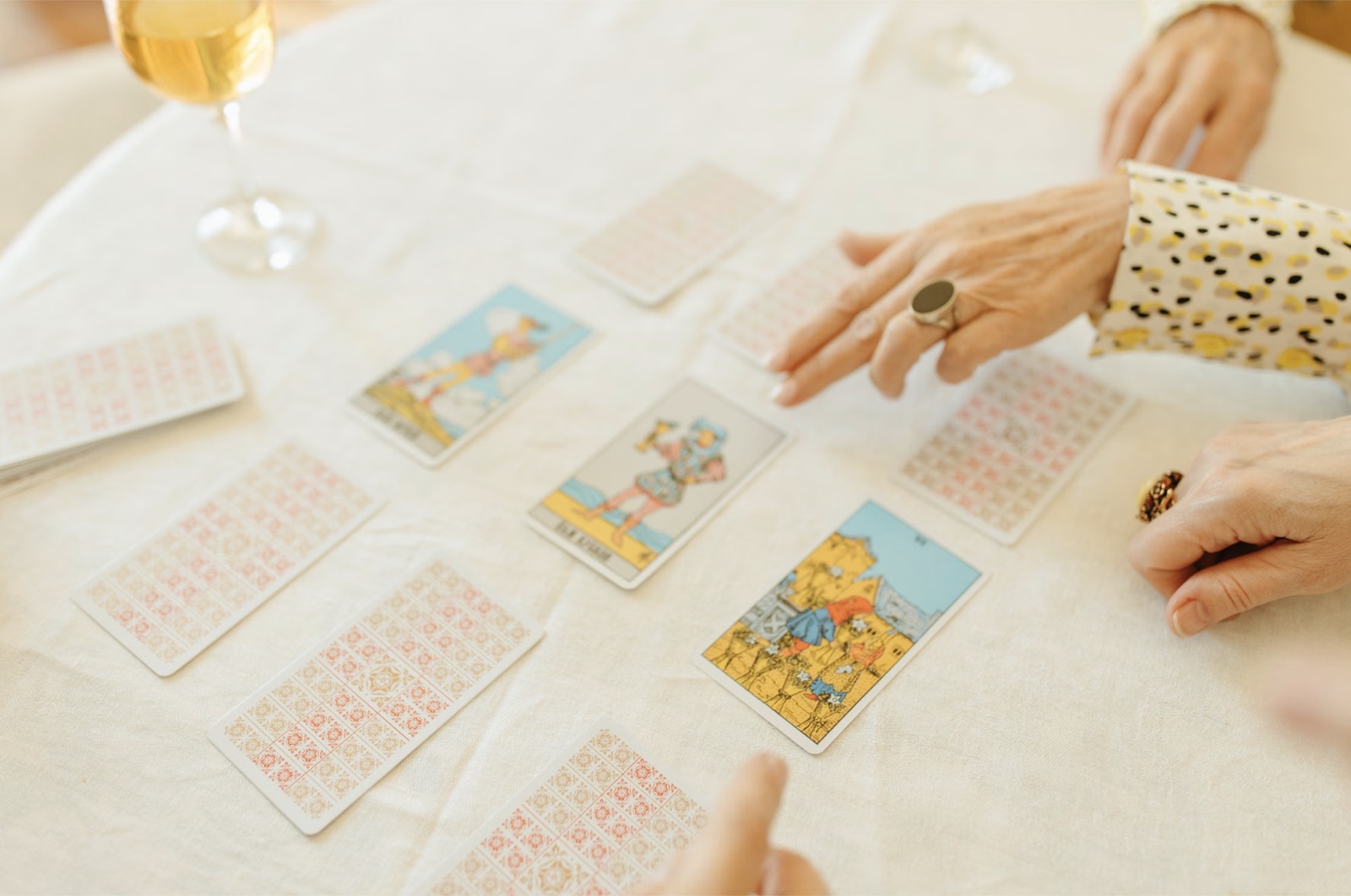
Tarot is not only about data. Ritual matters. The sense of entering a reflective state matters. A tool that includes guided pacing or realistic interactions can help the user feel more present and less distracted.
3. Interpretation with structure
Look for readings that are not just descriptive, but organized. The ideal output should separate themes, emotional dynamics, possible blind spots, and practical advice.
4. Support for common real-life scenarios
The most useful products understand recurring user needs. In practice, that usually means support for:
- Relationships
- Career and work
- Decisions
- Self-awareness
5. Actionable takeaways
If a reading feels poetic but gives you nothing to do with it, it is incomplete. A stronger tool ends with grounded next steps.
How Tarova Approaches AI Tarot Interpretation Differently
Tarova is built around a simple belief: tarot becomes more valuable when the experience helps you think more clearly, not just consume more content.
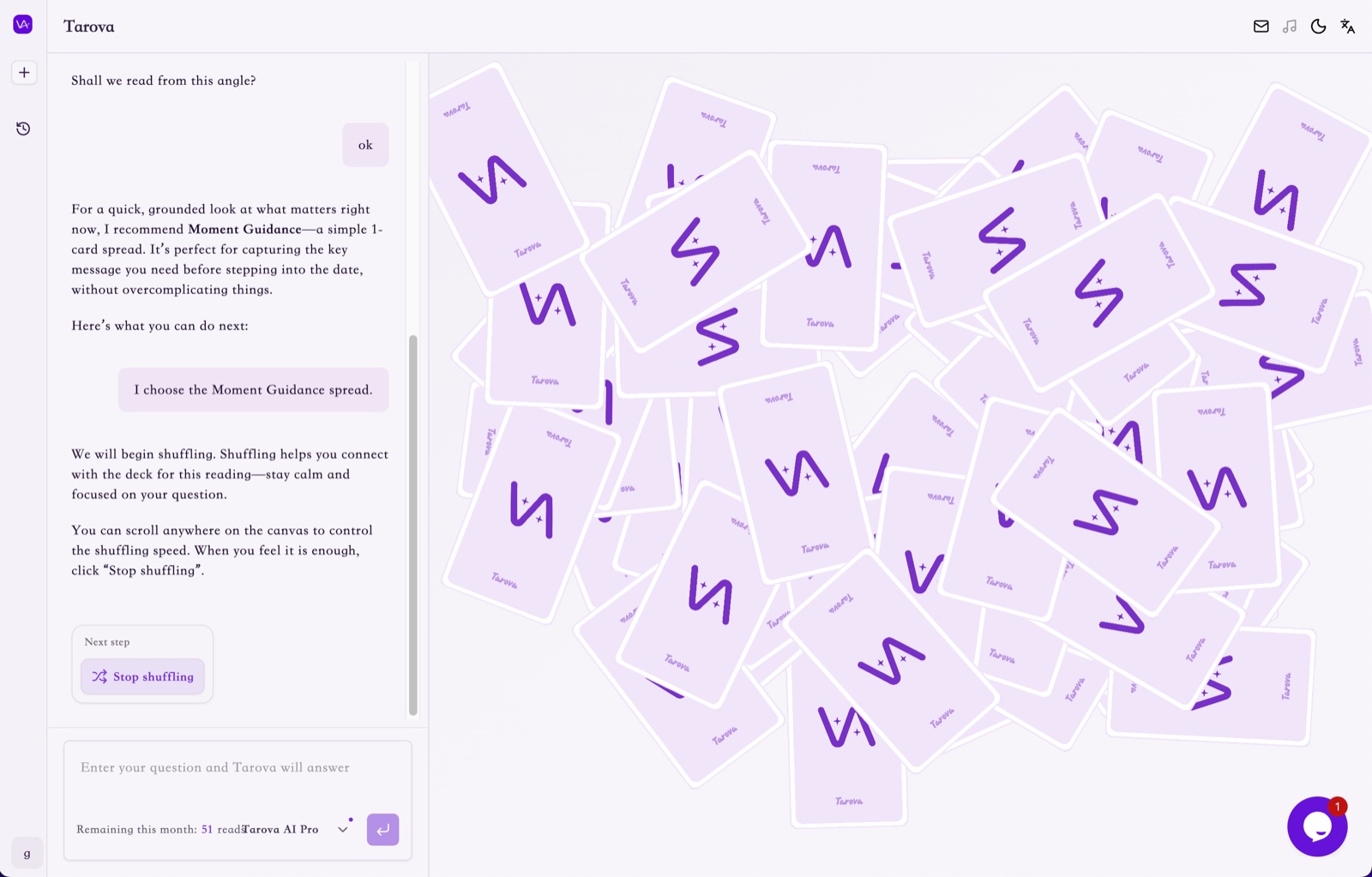
That is why Tarova is not centered on random card output. Its core experience combines guided questioning, realistic shuffle, cut, and draw interactions, and structured interpretation with actionable next-step guidance.
This matters because many users do not actually need more text. They need a better process.
Guided questions before the reading
Tarova helps users move from a vague emotional state into a clearer question. That changes the entire reading. Instead of starting from confusion and hoping the cards magically translate everything, the user begins with a more defined intention.
An immersive reading flow
The reading experience is designed to feel participatory rather than mechanical. The shuffle, cut, and draw sequence matters because it creates focus. It slows the user down enough to become intentional, which is often the difference between a forgettable output and a meaningful reading.
Structured interpretation
Tarova is designed to do more than describe symbols. The goal is to produce an interpretation that feels organized and readable. That means translating the reading into a form the user can actually work with: what is happening, what matters most, and what to do next.
Actionable next steps
A lot of tarot content stops at emotional resonance. Tarova is built to go one step further by helping users leave the reading with a next move they can take in real life.
A product designed around high-intent scenarios
Tarova focuses on the situations people return to again and again:
| Scenario | What users usually need | Why structure matters |
|---|---|---|
| Relationships | Clarity, patterns, emotional truth | Loose interpretation can create more confusion |
| Career | Direction, decision framing, confidence | Users need reflection plus practical guidance |
| Decisions | Trade-offs, timing, inner resistance | The reading should reveal tension clearly |
| Self-awareness | Pattern recognition, inner language | Insight is only useful if it becomes specific |
This is also where Tarova fits naturally into a stronger content and conversion journey. A user can move from guided education and blog content into the experience itself at /chat, explore examples at /showcases, and continue to /pricing when ready.
Generic AI Tarot Tool vs. Tarova's Approach
The difference is not just aesthetic. It is structural.
| Generic AI Tarot Tool | Tarova Approach |
|---|---|
| Starts with random output | Starts with guided question refinement |
| Focuses on card generation | Focuses on meaning, context, and user intent |
| Often feels fast but shallow | Slows the user into a more intentional reading |
| Gives symbolic text | Gives structured interpretation |
| Ends at explanation | Ends with actionable next steps |
That difference matters because users searching ai tarot interpretation are often not asking for more words. They are asking for better understanding.
When AI Tarot Interpretation Is Most Helpful
AI-assisted readings are especially useful when you are emotionally close to the situation and need help creating distance without disconnecting from yourself.
It can be helpful when:
- You know something feels off, but cannot articulate why
- You keep asking the same question in different ways
- You want to compare emotion with pattern
- You need a reflective step before a real-world decision
- You want a reading that feels structured, not chaotic
It is less useful when you are only looking for certainty. Tarot is strongest when treated as a tool for reflection, pattern recognition, and perspective, not as a machine for absolute predictions.
How to Get More Value From AI Tarot Interpretation
If you want better results from a reading, these simple habits help:
Be honest about the emotional center of the question
The sharper your question, the more useful the interpretation becomes.
Do not ask five different questions at once
One real question is better than a cluster of half-formed ones.
Notice what repeats
A strong reading often reveals a pattern, not just an answer. Pay attention to recurring emotional themes.
Keep the next step small
Not every reading needs a dramatic conclusion. Sometimes the most powerful outcome is a single grounded action.
FAQ About AI Tarot Interpretation
What is AI tarot interpretation?
AI tarot interpretation is a guided digital reading experience that helps users understand tarot symbolism in context. The strongest versions do more than define cards. They help clarify the question, organize the meaning of the spread, and turn insight into practical next steps.
Can AI help me interpret my own tarot reading?
Yes, especially if you already have emotions, questions, or card impressions but need structure. A good tool can help you interpret your own tarot reading by turning scattered symbols into a clearer narrative and more actionable reflection.
What makes a good tarot interpretation tool?
A strong tarot interpretation tool should guide the question, preserve reading flow, organize the interpretation clearly, and offer grounded next-step guidance. If it only produces generic text, it is not doing enough.
Is AI tarot interpretation the same as a random card generator?
No. A random card generator only creates output. Real ai tarot interpretation should help the user understand context, emotional dynamics, spread meaning, and what the reading suggests they pay attention to next.
Can AI tarot interpretation help with relationships or career questions?
Yes. It is especially useful in high-frequency life areas such as relationships, career, personal decisions, and self-awareness, because those are the moments when users most need help turning emotion into a readable question and a practical next move.
Is Tarova a free tarot interpretation tool?
Tarova is designed as an immersive AI tarot experience centered on guided questioning, realistic card interactions, structured interpretation, and practical guidance. For readers who want to move beyond generic readings, it offers a more intentional path into tarot insight.

Conclusion
The reason ai tarot interpretation matters is not because it makes tarot faster. It matters because it can make a reading clearer, more structured, and more useful when it is designed well.
The real difference is not whether a tool can produce words about cards. The real difference is whether it can help you understand your actual situation. That means better questions, more intentional interaction, stronger interpretation, and a clearer next step.
That is the direction Tarova is built around. Instead of treating tarot as random output, it treats the reading as a process of guided clarification. If that is the kind of experience you are looking for, start with the immersive reading flow at /chat, explore use cases at /showcases, and continue to /pricing when you want a deeper ongoing practice.