1. The Rise of Digital Tarot for Daily Wellness
In recent years, the way we approach mindfulness and self-reflection has shifted. Just as meditation apps replaced traditional silent retreats for many, the practice to draw tarot cards has moved from dimly lit rooms to our smartphones and browsers.
People are no longer just looking for "fortune-telling." Instead, drawing a tarot card online has become a daily wellness ritual—a way to pause, check in with one's emotions, and gain clarity on career choices, relationships, and personal growth. But with hundreds of online tarot generators available, how do you know which digital deck actually provides a meaningful experience?
2. What Happens When You Draw a Tarot Card Online?
To understand how online tarot works, we need to strip away the mysticism. Traditional tarot relies on the physical shuffling of 78 cards to create a random outcome. When you draw a tarot card online, the physical shuffle is replaced by a pseudo-random number generator (PRNG) algorithm.
From a psychological perspective (often rooted in Jungian archetypes), the cards act as a projective tool. When you draw "The Tower," the true value isn't in predicting a literal disaster; it's in observing your immediate emotional reaction to the card. Are you afraid? Relieved? Anxious?
A good digital tarot tool preserves this synchronicity and randomness, allowing your subconscious to project meaning onto the drawn cards.
3. Key Standards for a Quality Online Tarot Draw
Not all online tarot tools are created equal. When evaluating platforms, these are the critical features that separate a superficial card generator from a genuinely useful reflection tool:
3.1 True Algorithm Randomness
The platform must use a fair algorithm to shuffle all 78 cards. Every draw should be entirely independent, ensuring the user cannot manipulate the outcome.
3.2 Support for Reversals (Upright vs. Reversed)
This is essential for nuance. For example, drawing the Knight of Wands upright might signify drive and action, while drawing it reversed could indicate impulsiveness or a lack of direction. A tool that disables reversals loses half of the deck's emotional vocabulary.
3.3 Deck Flexibility (Major vs. Minor Arcana)
Sometimes you are asking a profound life question ("What is my ultimate career path?"), which is best answered by the 22 cards of the Major Arcana. Other times, you need the Minor Arcana for daily, situational advice. The best tools let you customize the deck.
3.4 Immersive Interaction
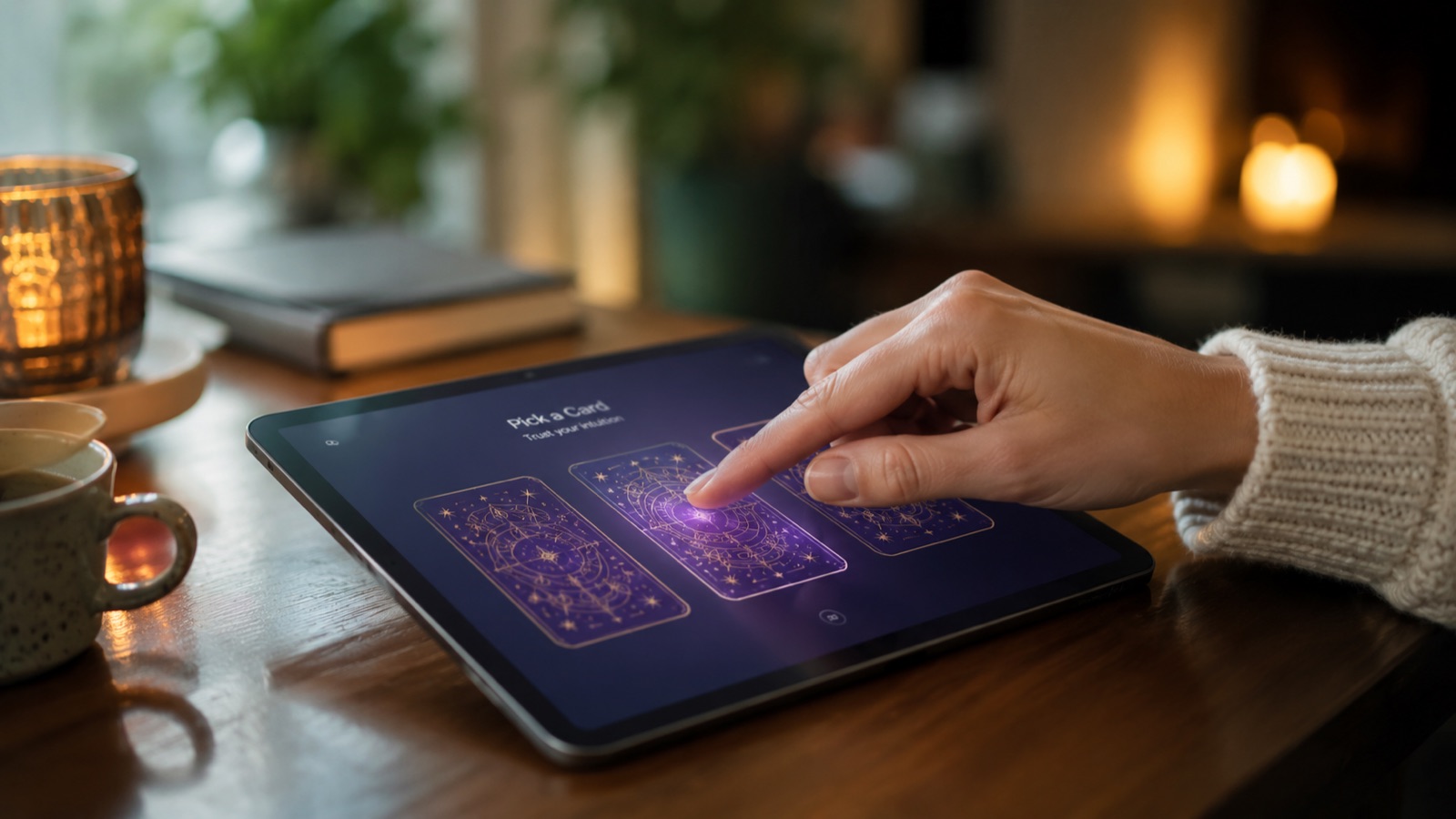
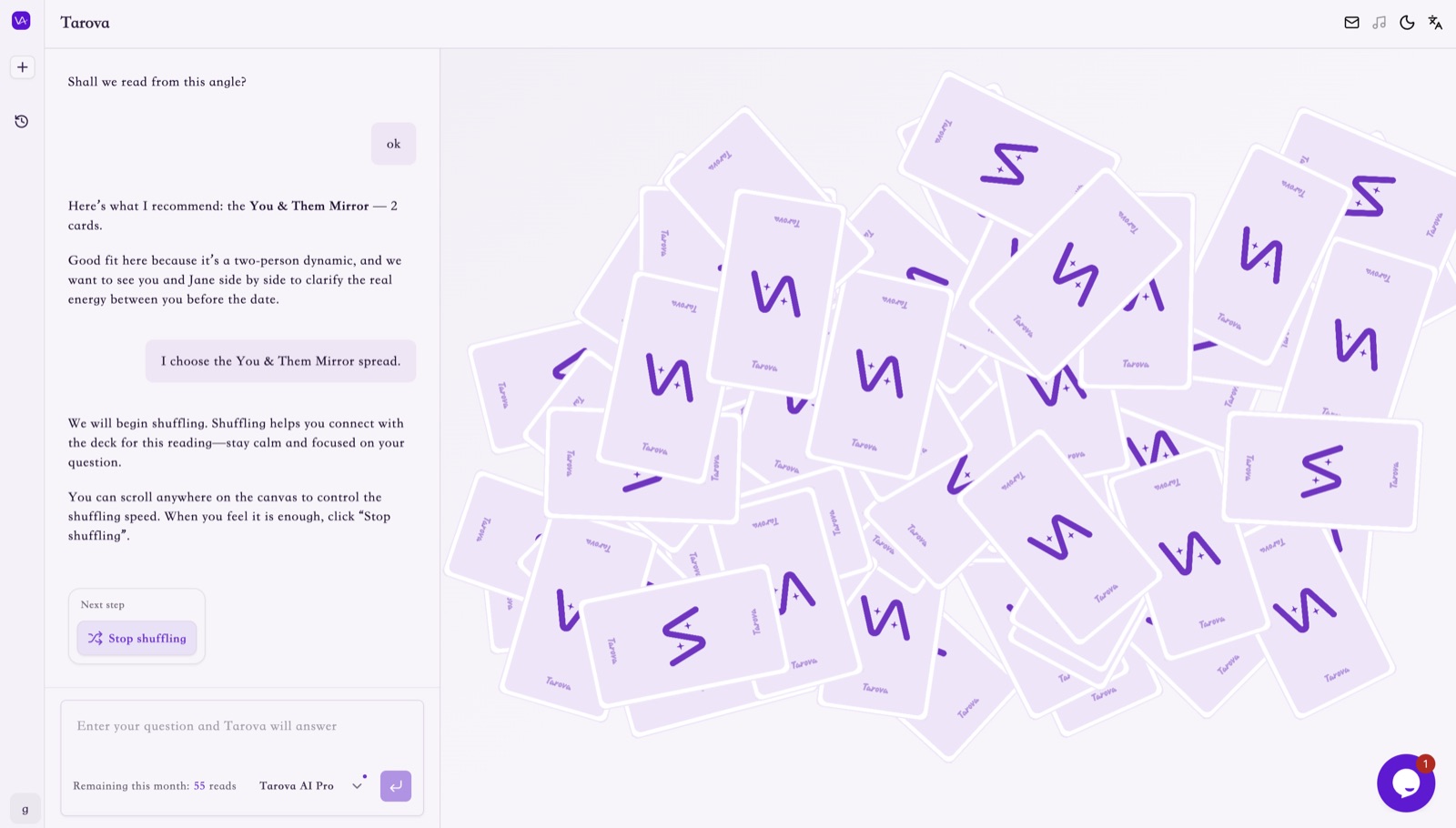
Simply clicking a button that instantly flashes a card breaks the psychological immersion. High-quality platforms simulate the tactile experience of shuffling, cutting, and drawing the cards, which helps you focus your intention.
3.5 Guided Questioning
The biggest flaw of basic generators is that they let you draw cards while your mind is still a mess of fuzzy emotions. Premium platforms guide you to clarify your question before you draw, leading to much more accurate and helpful interpretations.
4. How We Evaluate Digital Tarot Experiences
When we test online tarot platforms, we don't just look at the card artwork. We evaluate the entire user journey:
- Immersion: Does the platform make you feel present?
- Interpretation Depth: Does the AI rely on the generic "Barnum Effect" (vague statements that apply to anyone), or does it provide structured, specific insights?
- Actionability: Does the reading leave you with actionable next steps, or just more confusion?
5. Top Recommendations for Drawing Tarot Cards Online
Best Overall for Deep Reflection: Tarova.ai
If you want more than just a random image on a screen, Tarova is the premier choice. It is an immersive AI tarot product designed around guided questioning.
- The Experience: Instead of a simple "draw" button, Tarova initiates a conversation to help you organize your chaotic feelings into a precise question. You then go through a highly realistic digital shuffle, cut, and draw process.
- The Output: It provides a structured interpretation and actionable advice, completely avoiding the trap of fatalistic fortune-telling.
- Best For: Users seeking deep self-awareness, career decision-making, and relationship clarity.
Best for Quick, Raw Generation: Standard Tarot Generators (e.g., Tarotap)
- The Experience: These are straightforward, free tools that allow you to randomly draw 1 to 8 cards from a digital deck. They support reversals and Major Arcana-only modes.
- The Output: You get the cards and basic textbook meanings. You are left to interpret the connections yourself or pass them to a separate AI.
- Best For: Experienced tarot readers who already know how to interpret spreads and just need a digital deck on the go.
6. The Tarova Difference: Moving Beyond the "Barnum Effect"
Many basic AI tarot tools suffer from the Barnum Effect—they give you vague, universally applicable advice like, "You are facing a major transition."
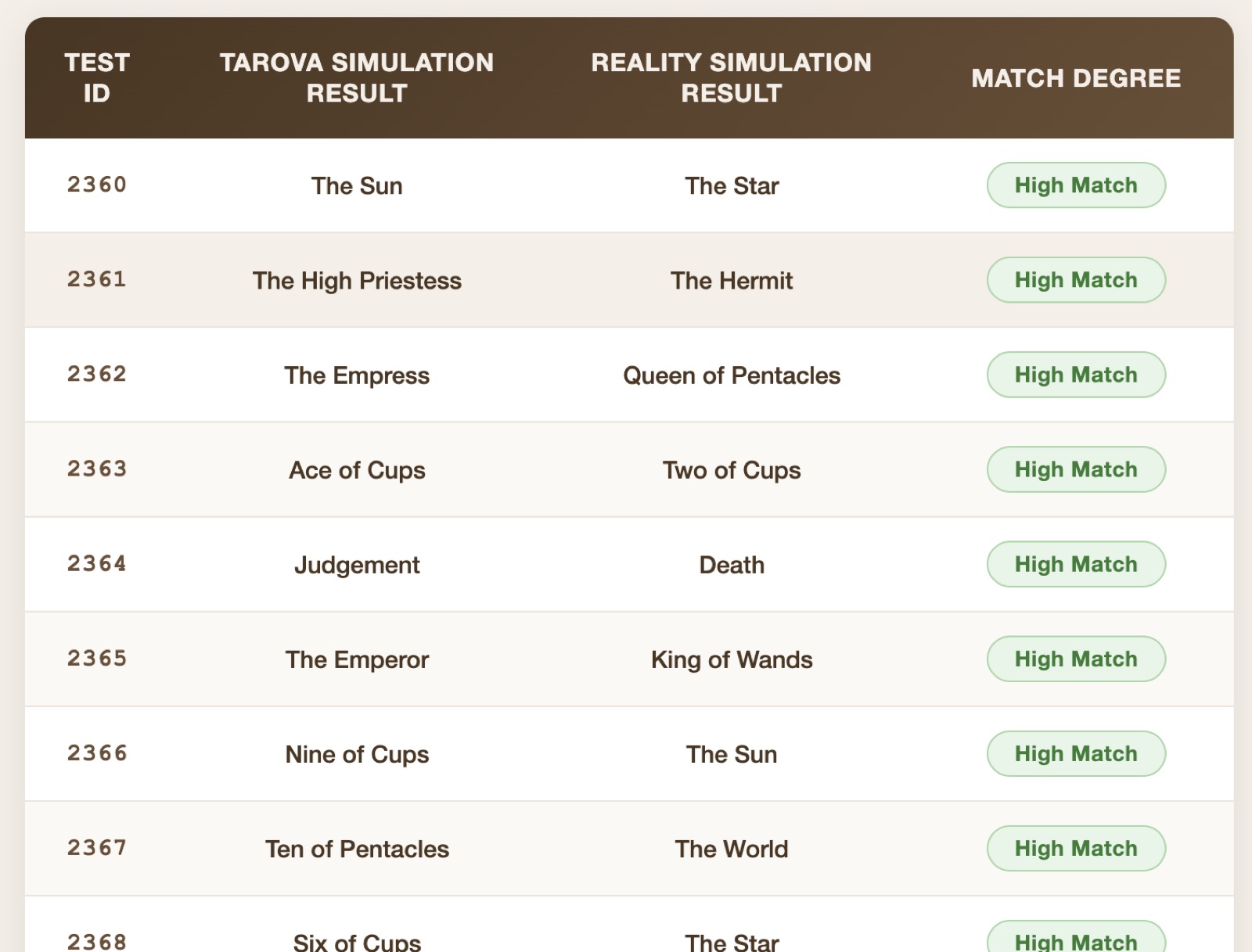
Tarova breaks this cycle. Because its core mechanic involves a pre-draw dialogue that clarifies your exact context, the subsequent AI interpretation is highly tailored. It doesn't just read the cards; it reads the cards in the exact context of your clarified question, providing a psychological mirror rather than a generic horoscope.
7. FAQ: Drawing Tarot Cards Online
Is an online tarot draw as accurate as a physical one?
Yes. Whether physical or digital, the core mechanism is randomness. As long as the platform uses a true random algorithm, the synchronicity and psychological projection remain exactly the same.
Can AI actually "read" tarot?
AI doesn't possess mystical powers. What AI does excel at is acting as an advanced knowledge base. It can instantly recall thousands of cross-referenced card meanings, identify patterns in your specific spread, and synthesize them into a coherent narrative based on the context you provided.
Is tarot just deterministic fortune-telling?
No. Tarot is not a deterministic tool that seals your fate. It reflects your current state, highlights subconscious patterns, and shows possible trends. The final decision always rests in your hands.
8. How to Get Started
Ready to experience a digital tarot draw that actually provides clarity?
- Start your journey: Try an immersive draw for free at Tarova's Chat.
- Explore real examples: See how others have used Tarova for career and relationship decisions in our Showcases.
- Unlock deeper insights: If you find value in the daily reflection, explore our Pricing for unlimited, deep-dive readings.
9. Conclusion
Drawing a tarot card online should be more than a fleeting click. It is an opportunity to pause, reflect, and organize your thoughts. While basic random generators have their place for quick pulls, investing your time in an immersive, guided experience like Tarova ensures that every card you draw brings genuine clarity to your life. Invest in your self-awareness—your mind will thank you.