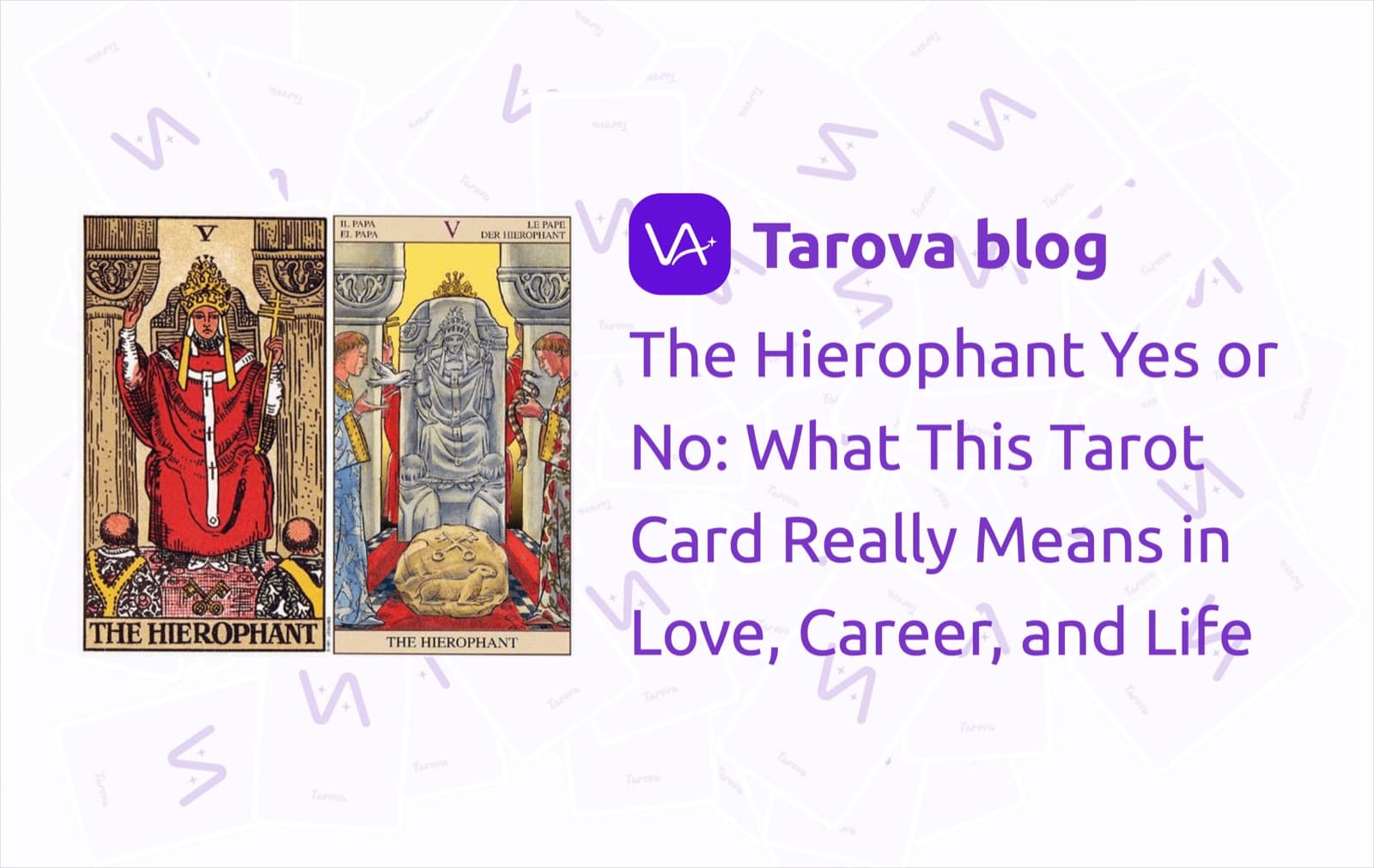
If you pulled this card and immediately searched "hierophant yes or no," you probably were not looking for a vague mystical speech. You wanted something simple. Is this a yes? A no? A sign to move forward, wait, commit, or take a more careful route?
That is exactly where The Hierophant becomes interesting.
Unlike cards that lean toward an obvious yes or an obvious no, The Hierophant usually points to something more structured. It is a card of tradition, guidance, institutions, approval, commitment, and doing things the right way. In practice, that means the answer is often maybe, but yes if the path is stable, formal, and aligned with shared values.
For questions about relationships, marriage, career direction, education, or long-term choices, that nuance matters. The Hierophant rarely rewards chaos. It rewards maturity, wise counsel, and decisions that can hold over time.
The Hierophant Yes or No: The Short Answer
If you want the fastest version, here it is:
- Upright The Hierophant: Maybe leaning yes
- Reversed The Hierophant: Not yet, or no in the current structure
The Hierophant becomes a stronger yes when the situation involves:
- commitment
- marriage or union
- education
- mentorship
- institutional support
- values that can actually sustain the future
It leans away from yes when:
- you want a fast answer without reflection
- the situation is rebellious, unstable, or impulsive
- you are trying to force something with no real foundation
- the relationship or decision goes against your core values
So if you are asking "Is The Hierophant a yes or no card?", the best honest answer is:
It is usually a maybe card that leans yes when the path is serious, grounded, and supported by wisdom, tradition, or commitment.
What Does The Hierophant Mean in Tarot?
To read the yes-or-no side of this card well, you need the core of The Hierophant tarot meaning first.
This card is often associated with:
- tradition
- doctrine
- guidance
- institutions
- moral structure
- commitment
- approval
- wise advice
- marriage or union
In plain language, The Hierophant asks: What is the established path here, and is there real value in following it?
Sometimes that is deeply helpful. It can point to a good teacher, a strong moral center, a healthy long-term relationship, or a life choice that creates stability.
Sometimes it is more challenging. It can point to conformity, pressure, rigid expectations, or the feeling that you are obeying rules that no longer fit your truth.
That is why The Hierophant is never a lazy yes card. It is a contextual one.
How We Read The Hierophant Yes or No at Tarova
At Tarova, we do not treat tarot as a random one-word answer machine. Our reading flow helps people turn blurry emotional pressure into a clearer question, then into a structured interpretation with practical next steps.
That matters especially with a card like The Hierophant, because the real question is rarely just "yes or no." It is usually something deeper:
- Is this relationship serious enough to build on?
- Should I trust the traditional route instead of forcing a shortcut?
- Is commitment the next step, or am I craving certainty?
- Do I need advice from someone wiser before I decide?
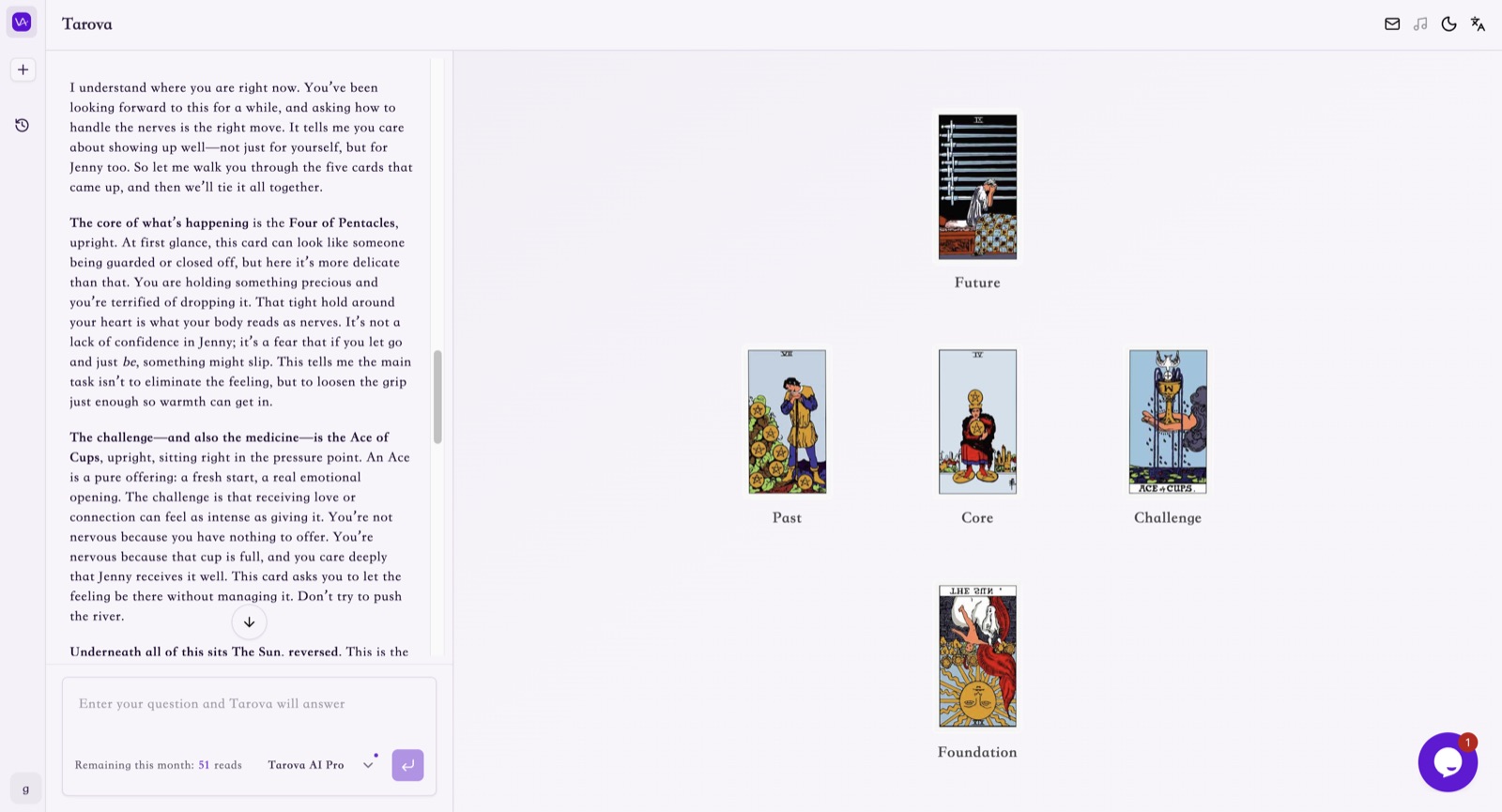
When someone asks "The Hierophant yes or no," we usually look at four things first:
1. Is the situation asking for commitment or freedom?
The Hierophant strongly favors commitment, loyalty, stability, and formal structure.
If your question is about:
- defining a relationship
- getting married
- entering a serious partnership
- joining an institution
- following a mentor
- choosing an established path
then the card often leans yes.
If your question is about:
- rejecting all structure
- avoiding responsibility
- chasing something impulsive
- escaping commitment
- doing the opposite just to feel independent
then The Hierophant becomes much less supportive.
2. Are your values aligned?
This card is deeply tied to shared beliefs and ethical consistency. It asks not only whether you want something, but whether it fits who you are and what kind of future you actually want to build.
When the values are aligned, the card often strengthens toward yes. When they are not, it may appear more as a warning that external approval is replacing inner truth.
3. Do you need guidance before acting?
The Hierophant often appears when the next right move is not pure instinct. It is consultation.
This is the card of:
- teachers
- mentors
- counselors
- trusted frameworks
- established wisdom
In yes-or-no readings, that often means:
Yes, but ask for guidance first.
4. Is this built to last?
The Hierophant rarely gets excited about short-term thrills. It wants durability.
If the situation can mature into something stable, official, or sustainable, the card leans supportive. If it is only exciting because it is dramatic, uncertain, or forbidden, the answer becomes much shakier.
The Hierophant Upright Meaning
The Hierophant upright meaning is the clearest version of the card's constructive energy.
Upright, this card can represent:
- wise counsel
- spiritual guidance
- healthy tradition
- moral clarity
- official recognition
- commitment
- marriage or union
- joining something meaningful
In a yes-or-no reading, upright Hierophant usually means:
Yes, if you are willing to take the mature path.
This is not the kind of yes that says, "Rush it." It is the kind that says, "Build this properly."
The Hierophant Reversed Meaning
The Hierophant reversed meaning is where the card becomes more uncomfortable and more revealing.
Reversed, it can point to:
- blind conformity
- oppressive rules
- rebellion without wisdom
- disconnection from your values
- fear of judgment
- staying inside a system that no longer fits
In yes-or-no terms, reversed Hierophant often means:
Not yet, or not in the current structure.
It can also suggest:
- you are saying yes for approval, not truth
- you are following tradition out of fear
- you need to question a rule before deciding
- the relationship or path looks proper on the outside but feels wrong inside
So while upright Hierophant often says yes through structure, reversed Hierophant can say no to empty structure.
The Hierophant in Love and Relationships
One of the most important search intents around this card is "The Hierophant love meaning." That makes sense, because this card naturally connects with commitment, values, and long-term partnership.

In love, The Hierophant often points to:
- serious intentions
- shared values
- official commitment
- mutual respect
- traditional relationship milestones
- the possibility of marriage
If you are asking The Hierophant yes or no in love, the answer is often:
Yes, if both people want something real, steady, and emotionally responsible.
This is especially true if the question is about:
- becoming exclusive
- meeting family
- long-term compatibility
- engagement or marriage
- choosing stability over mixed signals
But this card can also expose problems. If a relationship is being held together only by duty, appearances, family pressure, or social expectation, The Hierophant may be asking whether the bond is truly aligned or simply acceptable on paper.
The Hierophant as Feelings
When people search "The Hierophant as feelings," they usually want to know whether someone feels serious about them.
This card often suggests feelings like:
- respect
- sincerity
- loyalty
- trust
- admiration
- the desire for something meaningful and proper
It is not usually a card of chaos or wild passion. It is more likely to show someone thinking about the relationship in a mature, long-range way.
If you want fireworks, it may feel restrained. If you want reliability, it is a very good sign.
Does The Hierophant Mean Marriage?
This is one of the strongest secondary interpretations of the card.
The Hierophant is strongly associated with:
- commitment
- ritual
- public acknowledgment
- formal partnership
- shared beliefs
- lasting union
So if you are asking "Does The Hierophant mean marriage?", the answer is often yes. Not because it guarantees a wedding, but because it supports the kind of bond that can become one.
The Hierophant in Career and Education
The Hierophant career meaning is often underrated.
In work and study, this card can point to:
- formal education
- certifications
- mentors
- respected institutions
- traditional career paths
- learning from proven systems
- success through discipline and process

If you are asking The Hierophant yes or no about work, school, or a professional decision, the card often leans yes when:
- the path offers real training
- there is institutional support
- the long-term structure is strong
- you are building credibility
- you are willing to follow a process
This is not always the card of disruption. It is more often the card of qualification, alignment, and earned trust.
The Hierophant Past, Present, Future
Another important search cluster is "The Hierophant past present future."
Past
In the past position, The Hierophant often suggests that a teacher, belief system, family value, institution, or formal commitment shaped the current situation.
This can mean:
- you were guided well
- you learned the rules first
- a past commitment still affects your choices
- an old structure is still influencing your thinking
Present
In the present, The Hierophant often says this is a time for:
- reflection
- advice
- mature commitment
- doing things properly
- choosing long-term alignment over short-term intensity
This is where the card most strongly says: slow down and choose what can truly hold.
Future
In the future position, The Hierophant can indicate:
- formalization
- approval
- commitment
- entering a more stable phase
- learning from the right guide
- building something durable
As a future card, it can be very reassuring for questions about relationships, career direction, or meaningful life decisions.
The Hierophant Timing and Astrology
The Hierophant timing interpretation is usually linked to Taurus, which gives the card a slower, steadier, more grounded rhythm.

That matters because people often ask yes-or-no questions as if only the answer matters. In reality, timing changes everything.
The Hierophant usually suggests timing that feels like:
- slow but stable
- process-driven
- official rather than spontaneous
- grounded in preparation
- more likely to unfold through consistency than surprise
So if you are asking whether something will happen immediately, this card may not promise speed. What it does suggest is that solid results come from patience, guidance, and alignment.
The Hierophant Advice
One of the most useful ways to read this card is to stop asking only whether the answer is yes or no and ask what the card is advising you to do next.
The Hierophant advice is usually:
- seek wise counsel
- honor what truly matters to you
- do not confuse pressure with purpose
- choose commitment consciously
- build on a stable foundation
- let your values shape your decision
This is why The Hierophant is such a powerful card for decision-making. It does not just answer the question. It improves the quality of the question.
A Better Way to Ask Yes-or-No Questions
Most people start with questions like:
- Will they come back?
- Should I say yes?
- Is this relationship going to work?
- Am I making the right choice?
Those are understandable, but they are often too blunt for a card like The Hierophant.
More useful questions are:
- Is this connection built for long-term commitment?
- Are our values aligned enough for a stable future?
- Should I seek advice before making this choice?
- Is the traditional or structured path the wiser one right now?
- Am I choosing this because it is right, or because it is approved?
That is where Tarova is different. Our reading flow is built to help people move from emotional noise to a clear, answerable question, then to a structured interpretation with practical next steps.
If you want to explore that kind of reading flow, you can try Tarova Chat, browse more guides in the Tarova Blog, or compare plans on the pricing page.
FAQ
Is The Hierophant a yes or no card?
Usually it is a maybe, leaning yes when the situation involves commitment, tradition, guidance, or stable long-term structure.
The Hierophant yes or no in love?
Often yes, especially when both people want a serious, value-aligned, emotionally responsible relationship.
Does The Hierophant mean marriage?
It often can. The card strongly supports commitment, union, formal partnership, and shared values.
What is The Hierophant reversed yes or no meaning?
Reversed, the card usually weakens the yes. It can suggest misalignment, empty conformity, or a structure that needs to be questioned before you proceed.
What does The Hierophant mean for timing?
It is usually a slower, steadier card connected with Taurus energy. Think process, commitment, and gradual progress rather than instant movement.
Final Takeaway
If you came here looking for a quick answer to "hierophant yes or no," here is the cleanest version:
The Hierophant is a maybe card that turns into a stronger yes when the situation is serious, stable, guided, and aligned with real values.
It is one of the best tarot cards for commitment, marriage, education, mentorship, and choices that require maturity. It is one of the worst cards for impulsive decisions, rebellion for its own sake, or situations that look proper but feel empty.
In other words, The Hierophant does not ask whether you can say yes. It asks whether your yes is built on something real.