Tarot can feel intimidating when you're first starting.
Seventy-eight cards. Hundreds of symbols. Endless interpretations.
Many beginners assume they need to memorize every tarot card meaning before they can perform a reading. Fortunately, that's not true.
Learning how to read tarot cards is less about memorization and more about learning a new language: a language of symbols, patterns, intuition, and reflection.
In this guide, you'll learn:
- What tarot cards actually do
- How tarot readings work
- How to perform your first reading
- How to interpret cards in context
- Common mistakes beginners make
- How modern AI tools can help you develop your tarot reading skills
Whether you're exploring tarot for personal growth, spiritual reflection, or simple curiosity, this guide will help you build a strong foundation.
What Does It Mean to Read Tarot Cards?
Many people believe tarot reading is about predicting the future.
In reality, tarot is more often used as a tool for reflection and perspective.
Each tarot card contains symbols that represent experiences, emotions, challenges, opportunities, and archetypes that appear throughout life.
A tarot reading helps you explore questions such as:
- What am I not seeing clearly?
- What energy is influencing this situation?
- What should I focus on right now?
- What lesson can I learn from this challenge?
Rather than providing fixed answers, tarot encourages deeper understanding of a situation.
This is why two people can draw the same card and receive very different insights.
Understanding the Tarot Deck
Before reading tarot cards, it's important to understand the structure of the deck.
A traditional tarot deck contains 78 cards divided into two groups.
Major Arcana
The Major Arcana contains 22 cards that represent significant life lessons and transformative experiences.
Examples include:
- The Fool
- The Magician
- The High Priestess
- The Hermit
- The Star
- The World
When these cards appear in a reading, they often suggest larger themes or important turning points.
Minor Arcana
The Minor Arcana contains 56 cards divided into four suits.
Cups
Associated with:
- Emotions
- Relationships
- Intuition
Wands
Associated with:
- Passion
- Creativity
- Action
Swords
Associated with:
- Thoughts
- Communication
- Decisions
Pentacles
Associated with:
- Career
- Finances
- Material life
Learning these categories makes reading tarot much easier because patterns begin to emerge naturally.
How to Read Tarot Cards Step by Step
Many beginners believe reading tarot requires psychic abilities.
It doesn't.
A good reading follows a structured process.
Step 1: Focus on a Clear Question
The quality of a reading often depends on the quality of the question.
Instead of asking:
Will I be successful?
Try asking:
What should I focus on to improve my chances of success?
Specific questions often produce more meaningful insights.
Step 2: Shuffle the Deck
Shuffling serves an important purpose.
It helps you focus your attention on the question and creates a moment of intentional reflection.
Many tarot readers view this stage as part of the ritual itself.
There is no universally correct way to shuffle.
The goal is simply to become present with your question.
Step 3: Choose a Tarot Spread
A tarot spread provides structure for interpretation.
Different spreads answer different types of questions.
One-Card Spread
Best for:
- Daily guidance
- Quick reflection
- Simple questions
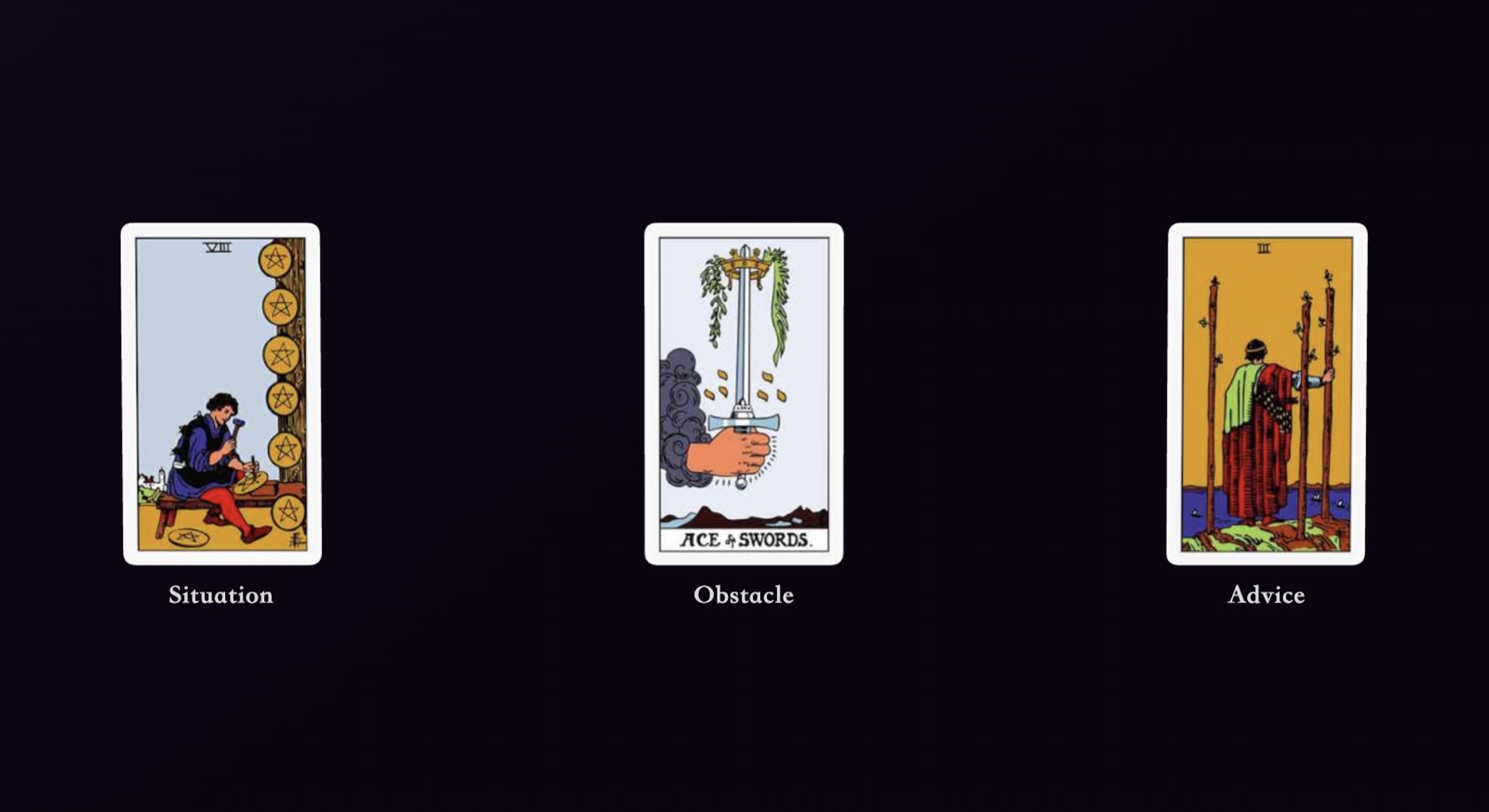
Three-Card Spread
One of the most popular layouts.
Common interpretations include:
- Past / Present / Future
- Situation / Challenge / Advice
This spread is often the best starting point for beginners.
Celtic Cross Spread
A more advanced layout that explores multiple dimensions of a situation.
It is useful for:
- Complex decisions
- Relationship questions
- Life transitions
Beginners should start simple before moving to larger spreads.
Step 4: Observe Before Interpreting
Many new readers immediately look up card meanings.
Instead, pause.
Ask yourself:
- What symbols stand out?
- What emotions does the card evoke?
- What story seems to be unfolding?
Tarot often reveals insights before any guidebook is opened.
Step 5: Connect the Cards Together
This is where real tarot reading begins.
Most beginners focus on individual card meanings.
Experienced readers focus on relationships between cards.
For example:
A reading containing:
- The Fool
- The Hermit
- The Star
may tell a story about:
- Starting a new journey
- Taking time for self-reflection
- Finding hope and renewal
The meaning comes from the narrative created by the cards collectively.
The Biggest Mistake Beginners Make
The most common mistake is treating tarot like a dictionary.
Many people assume:
Card = Meaning
But tarot doesn't work that way.
The same card can carry different messages depending on:
- The question
- The spread position
- The surrounding cards
- The person's situation
For example:
The Hermit might represent:
- Necessary solitude
- Inner wisdom
- Emotional withdrawal
The correct interpretation depends on context.
Understanding context is often more important than memorizing definitions.
How to Build Confidence as a Tarot Reader
Like any skill, tarot improves through practice.
Here are a few ways to develop confidence.
Keep a Tarot Journal
Record:
- Questions
- Cards drawn
- Initial interpretations
- Later reflections
Over time, patterns become easier to recognize.
Start with Small Readings
Avoid complex spreads initially.
One-card and three-card readings often provide surprisingly deep insights.
Learn Card Themes, Not Definitions
Instead of memorizing dozens of meanings, focus on core themes.
For example:
The Star often relates to:
- Hope
- Healing
- Inspiration
These themes remain useful across many different readings.
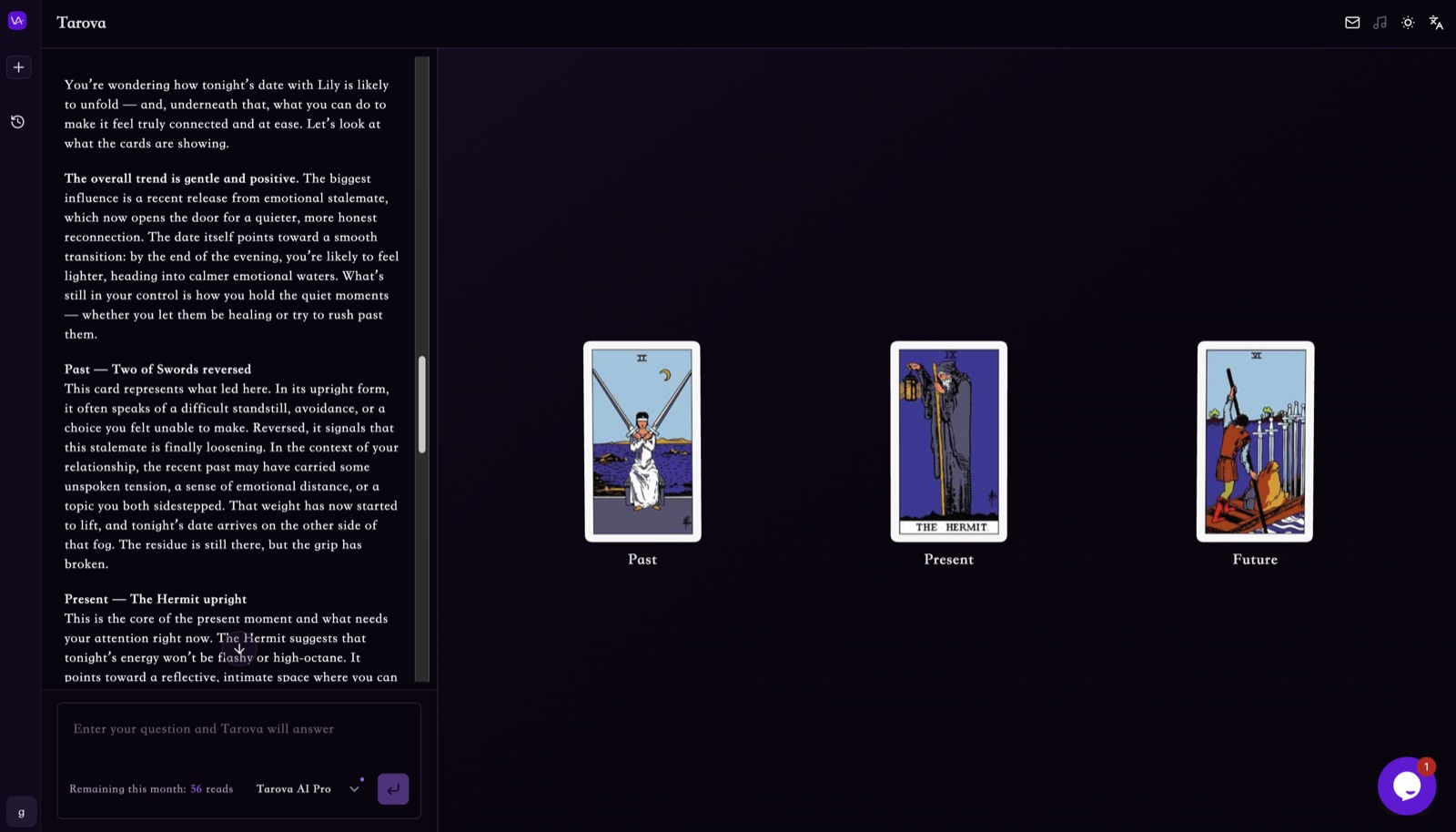
Can AI Help You Learn Tarot?
As tarot becomes more accessible online, many people are turning to AI-powered tarot tools to improve their understanding.
The biggest challenge for beginners isn't drawing cards.
It's interpretation.
Questions often arise such as:
- What does this card mean in this position?
- How do these cards relate to one another?
- What story is the spread trying to tell?
Modern AI tarot systems can help bridge that gap.
By analyzing:
- The question
- The spread
- Card relationships
- Symbolic themes
AI can provide interpretations that go beyond simple card definitions.
This can be especially useful for beginners who are still learning how cards interact within a reading.
Why Interpretation Matters More Than Memorization
Many people spend months trying to memorize all 78 tarot cards.
Yet experienced readers know that successful readings come from interpretation, not recall.
Knowing that The Tower represents upheaval is helpful.
Understanding why The Tower appears in a specific reading is where meaningful insight emerges.
The true skill of tarot reading lies in connecting symbols, questions, and personal context.
That process is often more important than any individual card meaning.
Practice Tarot Through Interactive Readings
Reading tarot is a skill that develops through experience.
The more readings you perform, the easier it becomes to recognize patterns and build confidence.
At Tarova, we've designed AI-guided tarot readings that help users move beyond static card meanings.
Rather than simply displaying predefined interpretations, the experience combines:
- Question clarification
- Guided card drawing
- Structured spreads
- Personalized interpretation
- Interactive follow-up conversations
This allows beginners to learn tarot while experiencing how cards function within a complete reading.
Frequently Asked Questions
Do I need to memorize all 78 tarot cards?
No. Understanding themes and practicing interpretation is often more valuable than memorizing definitions.
Can beginners read tarot cards?
Absolutely. Most readers begin with simple one-card or three-card spreads and develop confidence over time.
What is the easiest tarot spread for beginners?
A three-card spread is usually the best starting point because it introduces card relationships without becoming overwhelming.
How often should I practice tarot?
Consistency matters more than frequency. Even a few readings each week can help strengthen your understanding.
Can AI help interpret tarot cards?
AI can help explain card relationships, spread dynamics, and symbolic themes, making it a useful learning companion for both beginners and experienced readers.
Final Thoughts
Learning how to read tarot cards isn't about becoming an expert overnight.
It's about developing a deeper relationship with symbols, questions, and personal reflection.
Every reading teaches something new. Every spread offers a different perspective. And every card becomes easier to understand when viewed within the larger story of a reading.
The goal isn't to memorize every possible meaning.
The goal is to learn how to listen to the conversation the cards are creating and allow that conversation to reveal new insights about the path ahead.