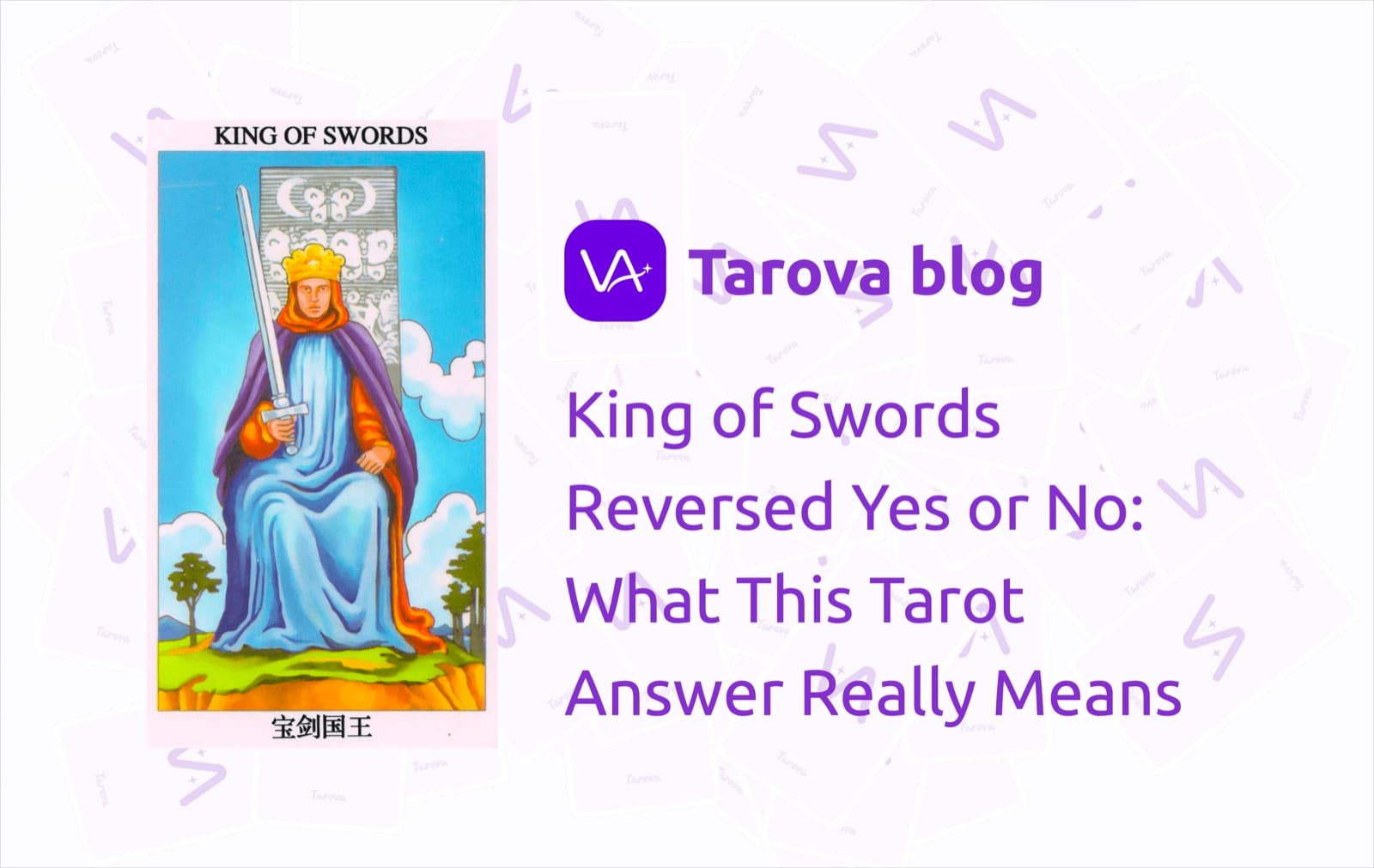
If you pulled King of Swords reversed in a yes-or-no reading, the short answer is this: usually not a clean yes. In most tarot readings, king of swords reversed yes or no points to no, not yet, or yes only if the mindset, communication, or power dynamic changes first.
That is what makes this card important. It does not just answer the question. It shows why the answer feels blocked. Instead of simple forward momentum, you may be dealing with confusion, rigid thinking, poor judgment, emotional coldness, or someone trying to control the outcome instead of understanding it.
This article is for readers who want more than a one-word verdict. If you want to understand what the card means in love, feelings, work, money, and hard decisions, this guide will help you read the answer with more confidence and less spiraling.
Quick Answer: King of Swords Reversed Yes or No
King of Swords reversed yes or no usually means:
- No when the situation is driven by manipulation, cold logic, or dishonesty
- Not yet when you are missing clarity and need better judgment first
- Conditional yes only when the problem can be solved through truth, boundaries, and a more balanced mindset
This is not a warm, flowing, easy card. It is a card of mental friction. It often appears when someone is:
- trying too hard to control the outcome
- refusing to listen
- being overly critical
- hiding behind logic
- making decisions from ego rather than truth
So if you are asking, "Is the King of Swords reversed a yes or no card?" the most accurate answer is: it leans no, and when it does not mean no, it means pause and correct the pattern first.
What the King of Swords Reversed Means
To understand the yes-or-no answer, you first need to understand the King of Swords reversed meaning.
Upright, the King of Swords is tied to:
- reason
- authority
- discipline
- integrity
- high standards
- fair judgment
Reversed, that same energy becomes distorted. Instead of clear authority, you get a version of intellect that can turn cold, harsh, controlling, or dishonest. The intelligence is still there, but the wisdom is not being used cleanly.
That is why this card often appears when:
- someone wants to win instead of understand
- communication has become sharp or defensive
- truth is being twisted
- rules are being used like weapons
- a decision is technically clever but emotionally or ethically wrong
In a Tarova-style reading, this would be the point where the process slows down. Instead of forcing certainty, the real task is to clarify the question, notice the fear underneath it, and separate truth from mental overcontrol.
Why This Card Rarely Gives a Straight Yes
Some tarot cards naturally lean yes because they show openness, momentum, warmth, or aligned action. The reversed King of Swords does the opposite. It interrupts certainty.
When this card appears in a yes-or-no reading, it often signals one of four conditions:
1. The judgment is flawed
Someone does not have the full picture. Facts may be missing, or the facts are being filtered through pride, defensiveness, or suspicion.
2. The communication is unhealthy
The answer may be blocked because the conversation is not honest. There may be passive aggression, intellectual manipulation, or emotional shutdown.
3. The power dynamic is uneven
This card often points to one person holding too much control. That can look like domination, criticism, emotional distance, or "I know best" behavior.
4. The question needs refinement
Sometimes the card says no because the question is still too vague. The seeker wants certainty, but what they really need is a better frame for the decision.
That is why king of swords reversed yes or no is more useful as a diagnostic answer than a simplistic one. It shows that the current energy is not reliable enough to trust blindly.
King of Swords Yes or No: Upright vs Reversed
The contrast between upright and reversed makes the yes-or-no logic much easier to read.
| Position | General Yes/No Lean | Core Message | Best Reading |
|---|---|---|---|
| King of Swords upright | Yes, if the facts support it | Clarity, truth, strong judgment | Move forward with logic and integrity |
| King of Swords reversed | No, not yet, or only conditionally | Distorted reasoning, control, coldness | Pause, verify motives, correct the mindset |
This is where many readers get confused. They know the King of Swords is a strong card, so they assume it must mean yes. But strength alone does not equal alignment. A powerful mind in a reversed position can create more damage than progress.
So when comparing king of swords yes or no with king of swords reversed yes or no, the difference is simple:
- upright says: trust your discernment
- reversed says: your discernment may be compromised
King of Swords Reversed Yes or No in Love
In love readings, King of Swords reversed yes or no usually leans no or not in the current form.
This is because love under this card often carries one of these patterns:
- emotional coldness
- criticism instead of connection
- power struggles
- control through words
- fear of vulnerability

If you asked, "Will this relationship work?" the card may be saying:
- not unless honesty improves
- not unless both people stop trying to win
- not unless emotional safety returns
If you asked, "Should I reach out?" the answer is often:
- not yet, if the conversation would only repeat the same mental battle
- yes, but carefully, if the purpose is truth, closure, or a calmer conversation
Love meaning for singles
For singles, this card can show over-analysis in dating. The mind is screening everything before the heart gets space to speak. Standards may be high, but the deeper issue is often guardedness.
Love meaning for relationships
In established relationships, the reversed King of Swords can point to a bond where conversations feel like debates, emotional needs get dismissed, and fairness is replaced by quiet control.
That is why king of swords love meaning becomes especially important when reversed. It does not just describe conflict. It describes a conflict style that erodes closeness over time.
King of Swords Reversed as Feelings
If you are asking about King of Swords reversed as feelings, the card rarely shows soft, open, emotionally available affection.
Instead, it can suggest someone who feels:
- guarded
- skeptical
- emotionally detached
- defensive
- controlling
- unwilling to say what they really feel
In some cases, the person has feelings but does not trust them. In others, they care more about staying in control than building emotional closeness.
That means this card can reflect:
- attraction without vulnerability
- interest mixed with mistrust
- emotional shutdown after conflict
- a tendency to intellectualize feelings instead of expressing them
If your yes-or-no question was "Do they genuinely care?" the answer is often:
- yes, but the expression is blocked
- or not in a healthy, emotionally available way
If your question was "Are they ready for honest emotional connection?" the card leans no unless there has already been a visible shift in communication and accountability.
King of Swords Reversed Yes or No for Career and Money
For work, money, and practical decisions, King of Swords reversed yes or no usually means be careful before proceeding.
This card often appears around:
- bad advice
- biased decisions
- toxic leadership
- legal or policy confusion
- overconfidence without real clarity

If you asked, "Should I accept this job?" the card may mean:
- no, if the culture feels controlling or unclear
- not yet, if the expectations, contract, or power structure are still murky
If you asked, "Will this plan succeed?" the card suggests:
- not without sharper analysis
- not if the strategy is built on ego, pressure, or distorted assumptions
If you asked, "Should I trust this financial advice?" this card strongly encourages verification. The reversed King of Swords often warns against following a polished voice just because it sounds authoritative.
In practical readings, this card is less about disaster and more about misjudgment risk. It asks you to slow down and become more exact.
King of Swords Reversed Advice
The best King of Swords reversed advice is not "do nothing." It is:
- stop forcing certainty
- check whether logic is hiding fear
- separate truth from defensiveness
- fix the conversation before making the decision
- do not let pride make the choice for you
Here is the advice in a more practical form:
Ask better questions
Instead of "Should I do this?" ask:
- What am I not seeing clearly?
- Where is the power imbalance?
- Is the problem truth, timing, or tone?
Watch the language
This card is strongly tied to speech. If words are being used to dominate, dismiss, or confuse, the situation is not ready for a clean yes.
Check the motive
Are you seeking clarity, or are you seeking control? That difference changes the reading.
Rebuild integrity
The upright King of Swords stands for integrity. Reversed, the repair path is the same value: honesty, fairness, and disciplined thinking.
Quick takeaway: The reversed King of Swords does not punish you for asking. It challenges you to become more truthful before acting.
How to Read This Card in a Yes-or-No Spread
If you use yes-or-no tarot often, this card works best when you read it in layers.
Step 1: Start with the lean
Begin with the basic answer:
- No
- Not yet
- Yes, but only if something important changes
Step 2: Identify the block
Then ask which problem is active:
- distorted thinking
- poor communication
- emotional coldness
- power imbalance
- unreliable authority
Step 3: Translate it into real life
Turn the symbolism into behavior:
- Who is not listening?
- Who is trying to control the outcome?
- What truth is being avoided?
- What conversation needs to happen first?
Step 4: Use the card as a next-step tool
At Tarova, the deeper value of tarot is not just prediction. It is structured reflection. A card like this becomes most useful when it helps the seeker move from emotional fog to a clearer question and a more grounded next action.
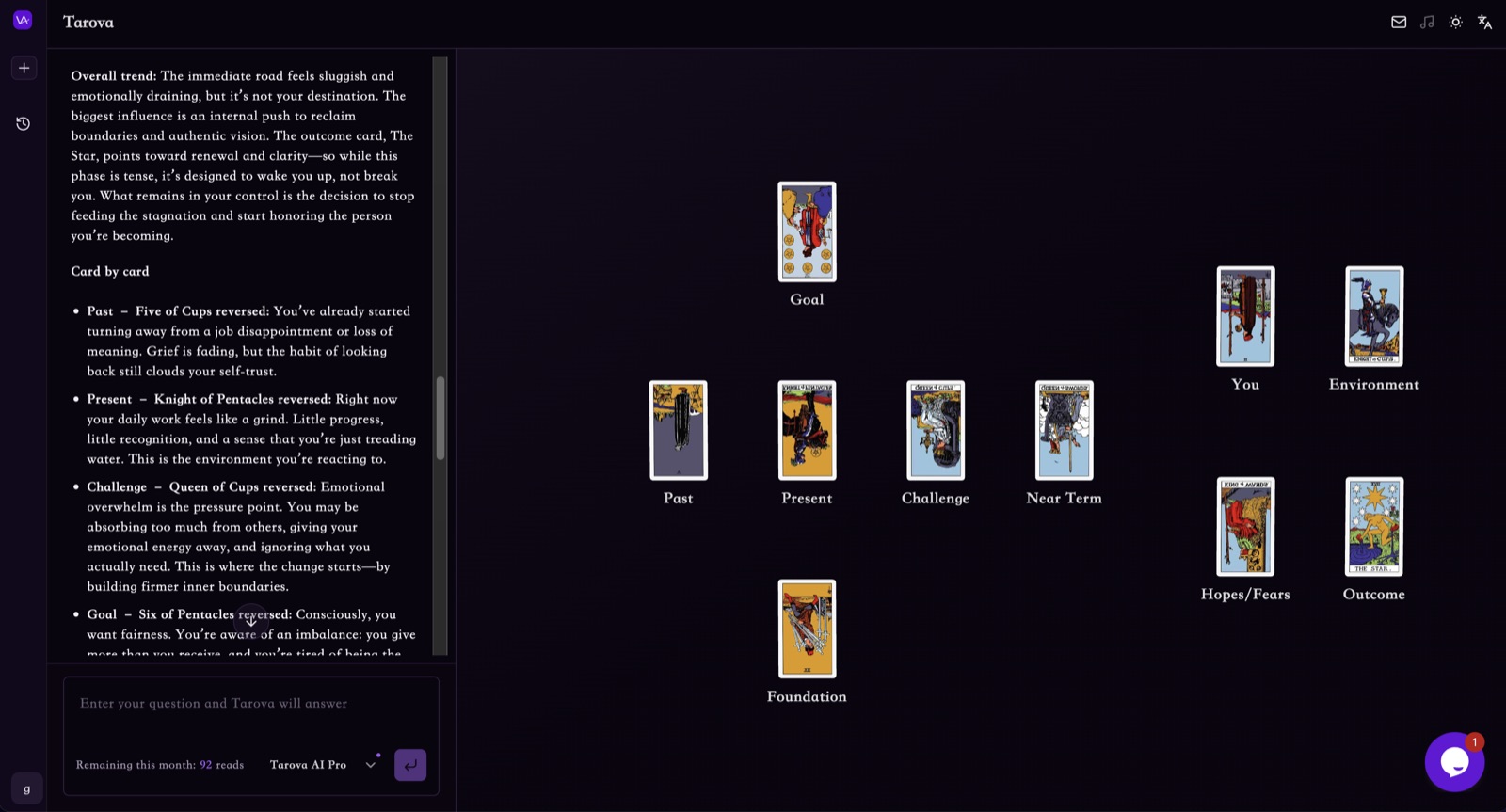
That makes the reversed King of Swords especially useful for:
- decision review
- relationship reality checks
- communication repair
- identifying unhealthy mental patterns
If you want the question itself to become clearer before you judge the answer, Tarova chat, showcases, and pricing are the best next places to explore.
FAQ
Is King of Swords reversed a yes or no card?
Usually, King of Swords reversed yes or no leans no or not yet. It can become a conditional yes, but only if the situation improves through honesty, clarity, and healthier communication.
What does King of Swords reversed mean in love?
In love, the reversed King of Swords often points to emotional distance, criticism, control, or intellectual defensiveness. It suggests the relationship may be blocked by unhealthy communication or a lack of vulnerability.
Is King of Swords yes or no different when upright?
Yes. King of Swords upright is much more likely to mean yes, if the facts support the decision. Reversed, the same card becomes a warning that the judgment, communication, or power dynamic is off.
What does King of Swords reversed as feelings mean?
It usually shows guarded, detached, skeptical, or defensive feelings. Someone may care, but they are not expressing emotion openly, or they may be using distance and logic to stay in control.
Is King of Swords reversed always negative?
No. It is not always negative, but it is cautionary. The card often appears to show where better judgment, clearer truth, or healthier boundaries are needed before moving forward.
What should I do after pulling King of Swords reversed?
Pause and review the question carefully. Check for manipulation, ego, defensiveness, or weak communication. The best next move is usually to seek clarity before taking action.
Final Takeaway
The cleanest way to read king of swords reversed yes or no is this:
- No, if the situation is rooted in control, dishonesty, or emotional coldness
- Not yet, if the truth is still unclear
- Conditional yes, if you are willing to correct the mindset, communication, and power dynamic first
That is why this card matters. It does not merely answer the question. It reveals the quality of the thinking behind the question.
If this card keeps showing up, the answer may not be "push harder." It may be "see more clearly first." And if you want a reading experience that helps you do exactly that, Tarova is designed for the moment when a vague emotional knot needs to become a clearer, more useful next step.