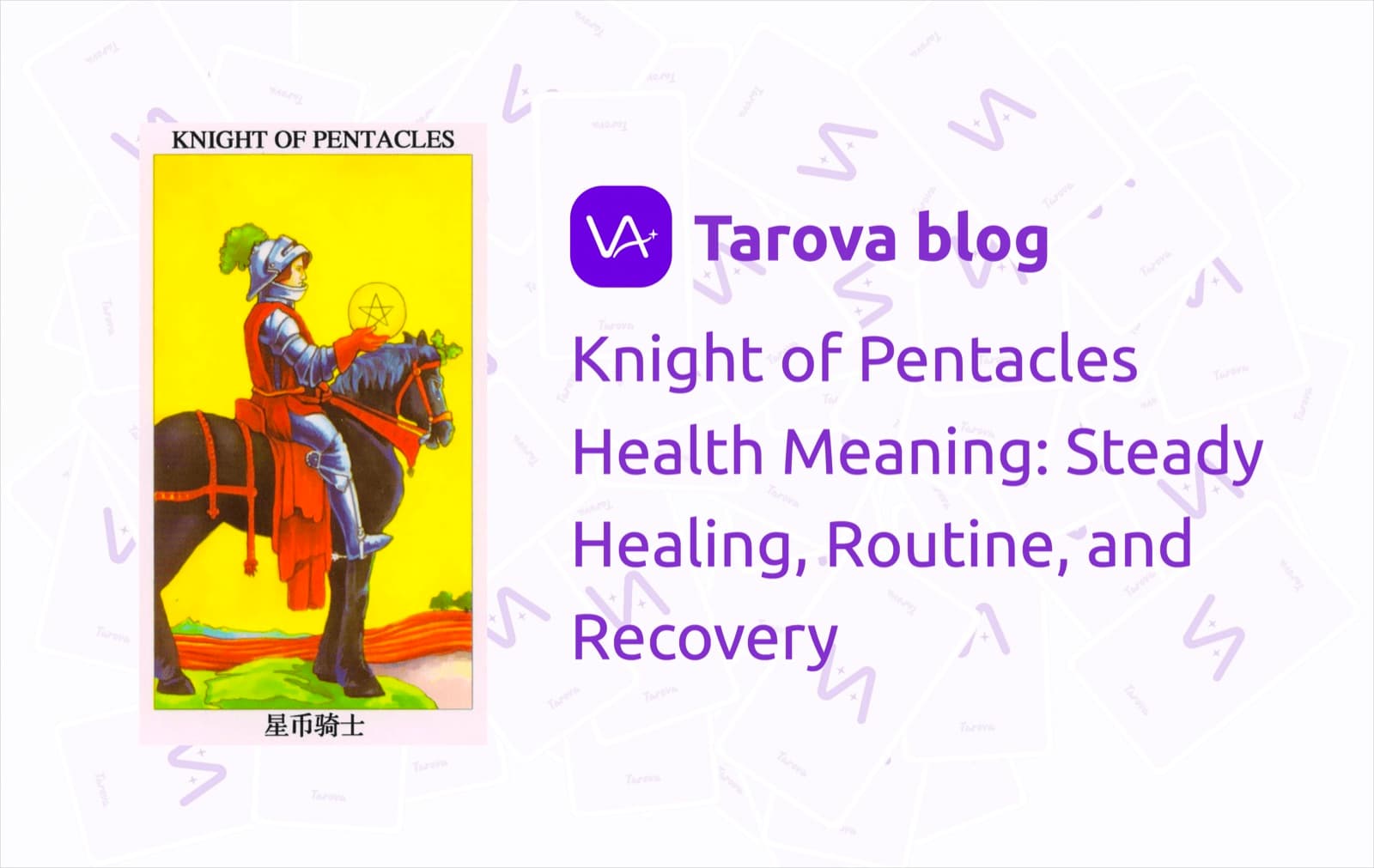
If you pulled the Knight of Pentacles in a health reading, the message is usually clear: progress comes through consistency. This is not a dramatic tarot card. It does not point to overnight change or emotional extremes. Instead, the Knight of Pentacles health meaning is about discipline, patience, routine, and practical care that works over time.
In a wellness context, this card often appears when healing depends on repeatable habits rather than intensity. It can point to rest, meal structure, steady treatment, pacing, and a more grounded relationship with the body. When reversed, the same energy can slide into stagnation, burnout, perfectionism, or routines that no longer support recovery.
If you want to turn a vague health concern into a clearer question, Tarova's guided process on Tarova Chat can help you move from anxiety to practical next steps.
Quick Answer: What Does Knight of Pentacles Mean in Health?
The Knight of Pentacles in health usually represents steady healing, physical discipline, and practical self-care. It suggests that improvement may be gradual rather than dramatic, but it is still meaningful. This card favors consistency, structure, and realistic progress over sudden action.
In short:
- Upright: slow recovery, reliable progress, healthy routine, commitment
- Reversed: stagnation, burnout, boredom, rigidity, draining habits
The simplest way to remember this card is: the Knight of Pentacles heals through repetition, not intensity.
Knight of Pentacles Health Meaning at a Glance
The Knight of Pentacles meaning is deeply tied to routine. In the traditional imagery, the knight is not charging forward wildly. He is steady, prepared, grounded, and focused. In a health reading, that visual language matters. This card often suggests that your body responds best to rhythm, order, and sustainable care.
It can be especially relevant when asking about:
- long-term recovery
- slow healing
- physical stamina
- emotional steadiness
- burnout from overwork
- whether a routine is helping or becoming too rigid
The deeper lesson is not simply "be disciplined." It is to build a form of discipline that keeps supporting life instead of draining it.

Knight of Pentacles Upright Health Meaning
The Knight of Pentacles upright meaning in health readings is generally reassuring. It points to steady progress, responsible choices, and practical healing. You may not be moving quickly, but you are moving in a stable direction.
This card often appears when recovery depends on doing basic things well:
- sleeping consistently
- eating regularly
- following a treatment plan
- pacing your energy
- building strength slowly
- staying grounded instead of forcing results
The upright Knight of Pentacles often supports the idea that your current efforts matter, even if the results feel subtle. Slow progress is still progress. In fact, with this card, slower movement often creates a stronger foundation.
Physical Health
For physical health, this card suggests endurance, gradual rebuilding, and sensible pacing. If you are asking whether improvement is possible, the answer is often yes, but with patience. The body may need time, structure, and repetition more than dramatic intervention.
This is a supportive card for questions like:
- "Am I getting better?"
- "Should I stay consistent with this plan?"
- "Is slow progress still real progress?"
Usually, the card says yes, as long as the routine is realistic enough to maintain.
Mental and Emotional Health
The Knight of Pentacles health meaning also applies to mental and emotional well-being. When life feels chaotic, routine can reduce overwhelm. Repeated small acts of care can restore stability. This card often points to grounded habits that create safety instead of intensity.
That may include:
- going to bed at a similar time
- reducing overstimulation
- keeping manageable commitments
- slowing down after long periods of stress
- rebuilding self-trust through follow-through

Even upright, this card has a warning built into it: routine should support you, not flatten you. Healing is not only discipline. It is also presence.
Knight of Pentacles Reversed Health Meaning
The Knight of Pentacles reversed meaning in health readings shifts the message from stable effort to stuck effort. The routine is still there, but it may have become stale, heavy, mechanical, or emotionally empty. What once created stability may now be creating exhaustion.
This reversed card can appear when:
- you are doing the same thing without progress
- you are burnt out from being overly responsible
- your self-care feels like a chore
- perfectionism is slowing recovery
- you are forcing discipline after your body has already asked for rest
One of the strongest themes here is stagnation. The issue is not always lack of effort. Sometimes it is effort without flexibility.

Burnout, Exhaustion, and Over-Control
In a health context, the reversed Knight of Pentacles often warns against treating productivity as proof of worth. You may be pushing through fatigue, ignoring emotional strain, or repeating a routine that looks good on the outside but no longer feels alive.
This can point to:
- burnout hidden behind responsibility
- chronic tiredness that has become normalized
- routines that feel punishing instead of nourishing
- over-control around food, exercise, or sleep
- a fear of change disguised as discipline
The real question becomes: are you staying committed to healing, or are you staying trapped inside a pattern?
When Slow Progress Turns Into Being Stuck
The upright Knight of Pentacles accepts slow movement. The reversed card asks whether slow movement has turned into a rut. That difference matters.
Sometimes this card suggests that healing needs an update:
- a gentler routine
- a more honest pace
- more emotional flexibility
- less perfectionism
- more rest than you have allowed yourself
Reversed, this card does not always mean disaster. More often, it means the method needs to change.
What the Card Says About Healing and Timing
If your question is about timing, the Knight of Pentacles timing message is straightforward: improvement is likely to be gradual. This card rarely signals a sudden breakthrough. Instead, it describes healing that unfolds through consistency, patience, and realistic repetition.
That can be reassuring and frustrating at the same time. The reassurance is that progress is possible. The frustration is that the card asks you to trust what is building slowly.
In timing terms, this card suggests:
- steady improvement rather than fast relief
- habits mattering more than motivation
- consistent effort beating short bursts of energy
- structure helping recovery take hold
If reversed, timing may feel delayed because the current pattern is no longer working well.
Knight of Pentacles as a Person in Health Readings
The keyword cluster around this card also includes Knight of Pentacles as a person, and that interpretation can matter in health questions. Sometimes this card describes you. Other times it points to someone around you, such as a partner, caregiver, coach, or therapist.
As a person, the Knight of Pentacles often appears as someone who is:
- dependable
- patient
- practical
- health-conscious
- serious about long-term improvement
- steady rather than dramatic
That influence can be helpful when you need grounded support. In shadow form, however, the same energy can become rigid, emotionally distant, or overly focused on doing everything "correctly."
Knight of Pentacles Advice for Your Well-Being
The Knight of Pentacles advice in health readings is not glamorous, but it is strong. Take the next sensible step. Build routines you can genuinely maintain. Respect slow healing instead of treating it like failure.
This card often advises:
- choose consistency over extremes
- simplify your routine
- stay honest about your energy level
- let healing be steady instead of dramatic
- notice when discipline is helping and when it is hardening you
One helpful way to work with this card is to ask:
- What routine is truly helping me?
- What habit am I repeating just because it feels familiar?
- Where do I need more structure?
- Where do I need more softness?
Why This Card Matters for Tarot and Self-Reflection
For Tarova readers, the Knight of Pentacles is especially useful in health readings because it does not reduce well-being to a shallow yes or no. It invites a more helpful conversation about patterns, effort, limits, and what sustainable care really looks like.
This makes the card especially relevant when you are dealing with:
- recovery after stress
- long periods of low energy
- inconsistent self-care
- burnout from responsibility
- the need to turn vague concern into a grounded next step
FAQ
Is Knight of Pentacles a good health card?
Yes, upright it is usually a good health card because it points to stability, patience, and sustainable progress. It is especially positive for gradual healing, habit-building, and recovery through structure.
What does Knight of Pentacles mean for recovery?
For recovery, this card usually means improvement happens through consistency rather than speed. Healing may be gradual, but it can still be dependable and real.
What does Knight of Pentacles reversed mean in a health reading?
Reversed, this card can point to burnout, being stuck in an unhelpful pattern, or routines that feel heavy and joyless. It often suggests that the method needs adjustment.
Does Knight of Pentacles mean slow healing?
Often, yes. This card tends to describe slow but steady healing rather than fast change. It favors practical care, repetition, and patience.
What is the spiritual lesson of Knight of Pentacles in health?
Its spiritual lesson is that repeated care becomes powerful over time. Healing is not only about fixing a problem. It is also about building a stable relationship with your body, your energy, and your limits.
Conclusion
The Knight of Pentacles health meaning is about grounded healing. Upright, it points to practical progress, patience, and routines that strengthen you. Reversed, it warns that routine can slip into stagnation, burnout, or emotional disconnection if it loses purpose.
If this card appears in your reading, the message is not to chase intensity. It is to look closely at your habits, your pace, and your relationship with discipline. The most healing path may not be dramatic at all. It may simply be the one you can return to tomorrow with steadiness and self-respect.