Online tarot reading has become one of the most accessible ways to explore tarot today.
Instead of visiting a physical tarot reader or learning all 78 card meanings, users can now receive readings instantly through digital platforms.
But many people still ask:
- How does an online tarot reading actually work?
- Can it be accurate without a human reader?
- What should I expect from a digital tarot experience?
This guide explains how online tarot readings function, what makes them useful, and how modern AI-based systems are changing the experience.
What Is an Online Tarot Reading?
An online tarot reading is a digital version of a traditional tarot session.
Instead of sitting across from a tarot reader, the process happens through a website or application.
Typically, the experience includes:
- A question or intention from the user
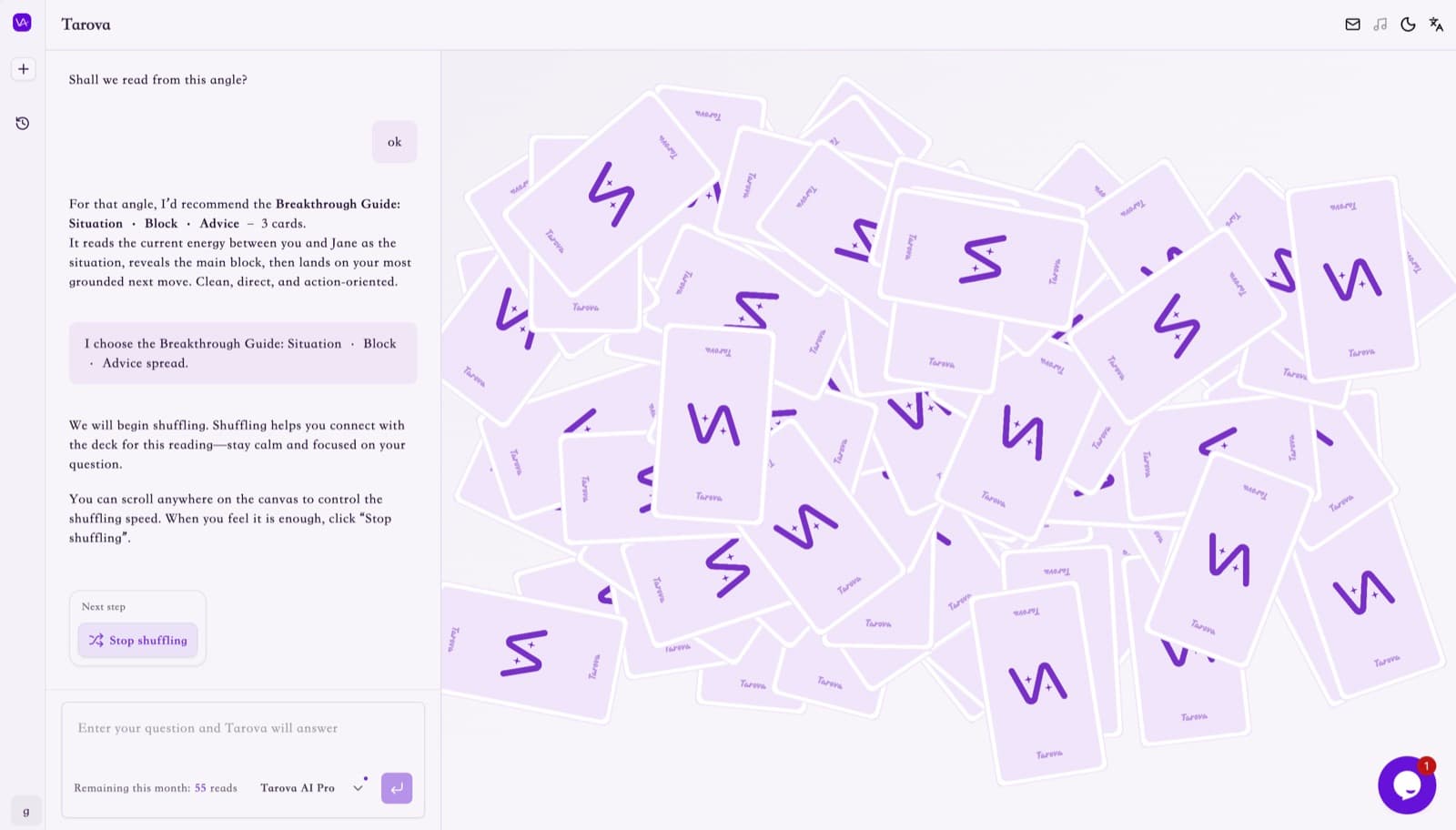
- A virtual shuffle or card draw
- A selected tarot spread
- An interpretation of the cards
While the format is digital, the goal remains the same:
To provide insight, reflection, and perspective on a question or situation.
Why Online Tarot Readings Have Become Popular
The rise of online tarot reading is closely tied to accessibility and convenience.
1. Instant Access
Users can receive a reading at any time without scheduling an appointment.
This makes tarot more approachable for beginners or casual users.
2. Privacy
Some people prefer exploring personal questions in a private setting rather than speaking with another person.
Online tarot provides a more private experience.
3. Simplicity
Traditional tarot reading can feel complex for beginners.
Online platforms often simplify the process by guiding users step by step.
4. Consistency
Digital systems ensure structured readings, making the experience more repeatable and easy to understand.
How Online Tarot Readings Work
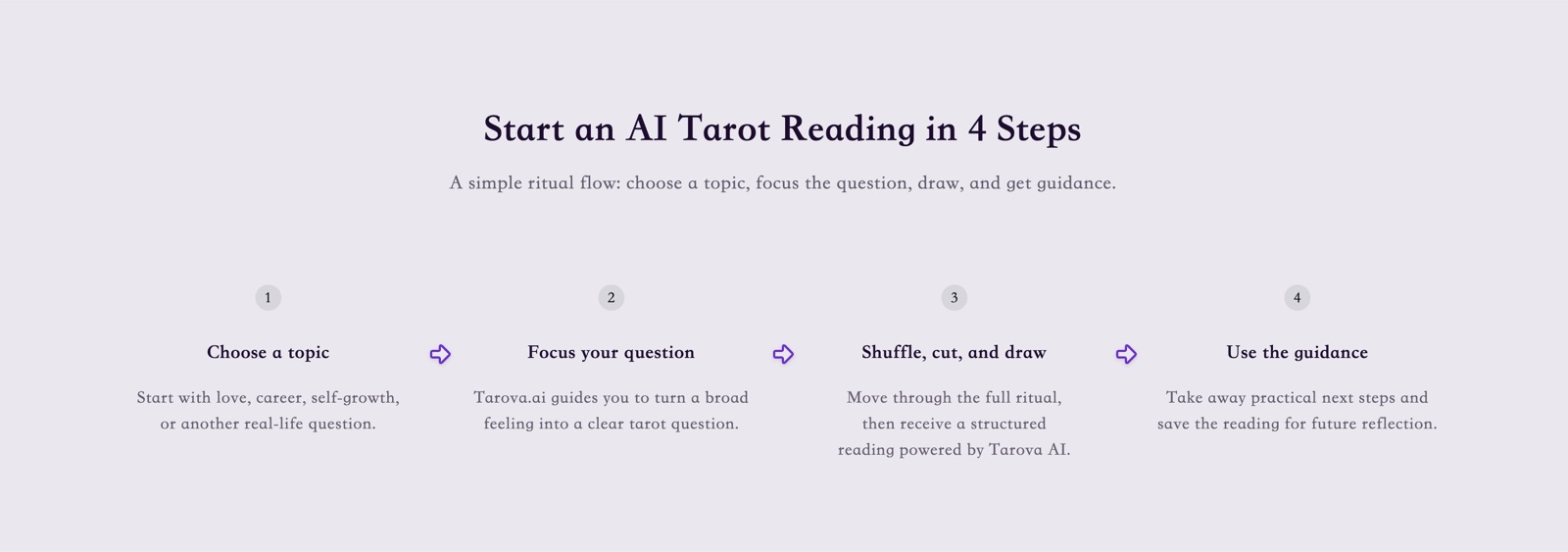
Although different platforms vary, most online tarot readings follow a similar structure.
Step 1: Define a Question
The user begins by entering a question or topic.
For example:
- What should I focus on in my career?
- What is the current energy of my relationship?
- What do I need to understand right now?
Clear questions tend to produce more meaningful interpretations.
Step 2: Card Selection
The system simulates a shuffle and randomly selects tarot cards.
Depending on the platform, this may be:
- A simple random draw
- A structured algorithm
- Or an AI-guided selection process
Step 3: Tarot Spread Assignment
The selected cards are placed into a spread.
Common spreads include:
- One-card guidance
- Three-card spreads (past, present, future)
- More complex layouts for detailed readings
The spread provides context for interpretation.
Step 4: Interpretation
This is where the reading becomes meaningful.
Each card is interpreted based on:
- Its symbolic meaning
- Its position in the spread
- Its relationship with other cards
- The user’s original question
The interpretation transforms random cards into a coherent narrative.
Traditional Online Tarot vs AI Tarot Reading
Not all online tarot readings are the same.
Broadly, they fall into two categories.
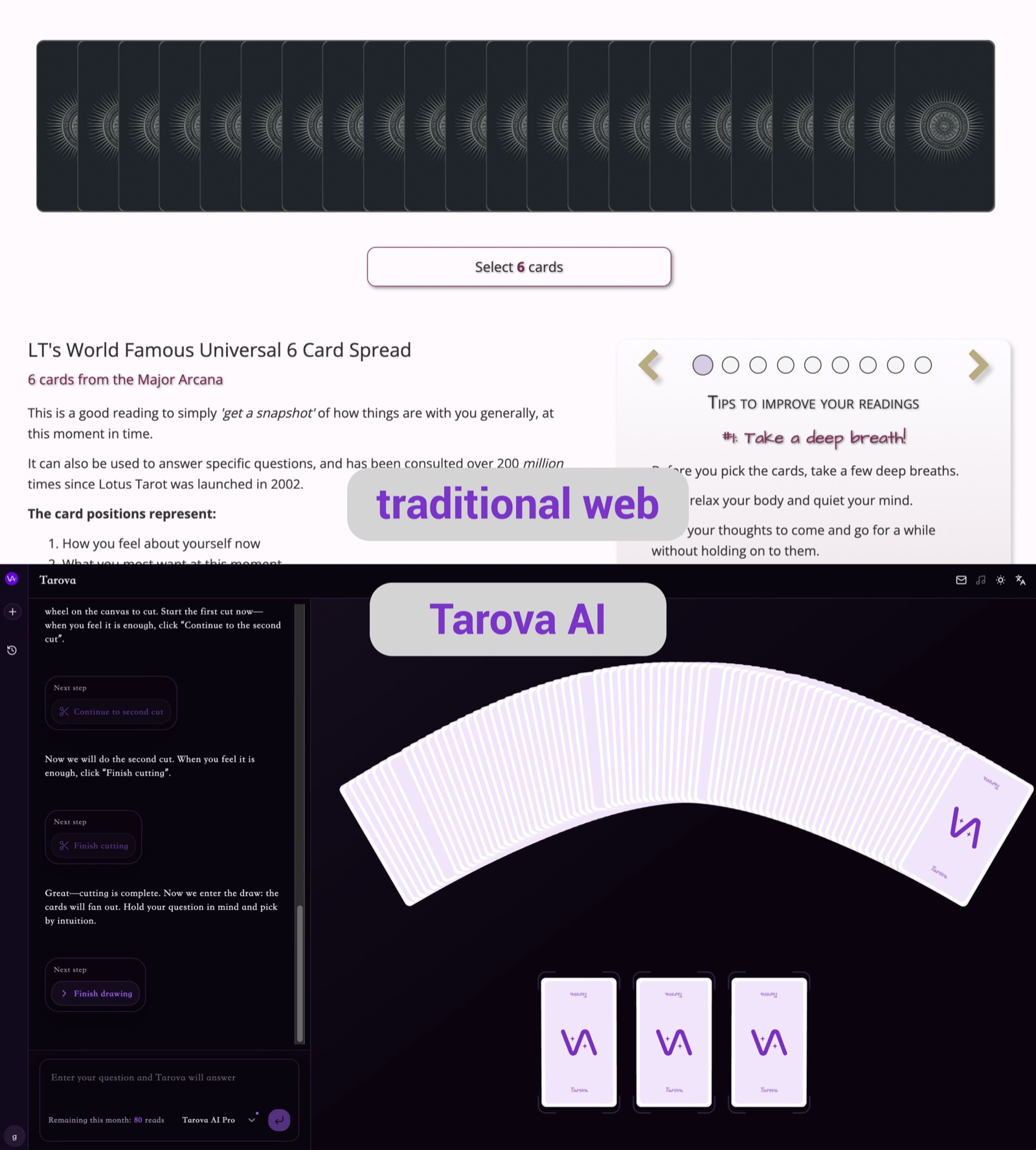
Traditional Online Tarot
Traditional systems typically rely on:
- Pre-written card meanings
- Fixed interpretations
- Static outputs
While useful, these readings can feel generic or disconnected from the user’s situation.
AI Tarot Reading
AI-based tarot systems introduce a more dynamic approach.
Instead of relying only on fixed definitions, AI can analyze:
- The user’s question
- Card combinations
- Spread structure
- Narrative flow between cards
This allows the reading to adapt to context rather than relying on static meanings.
The result is often a more personalized interpretation that feels closer to a real conversational reading.
What Makes an Online Tarot Reading Feel Accurate?
Accuracy in tarot is not about predicting exact events.
Instead, it often comes from relevance.
A reading feels meaningful when it reflects:
- Current emotional states
- Ongoing life situations
- Internal conflicts or questions
- Decision-making patterns
Online tarot readings that consider context and narrative structure tend to feel more insightful than simple keyword-based interpretations.
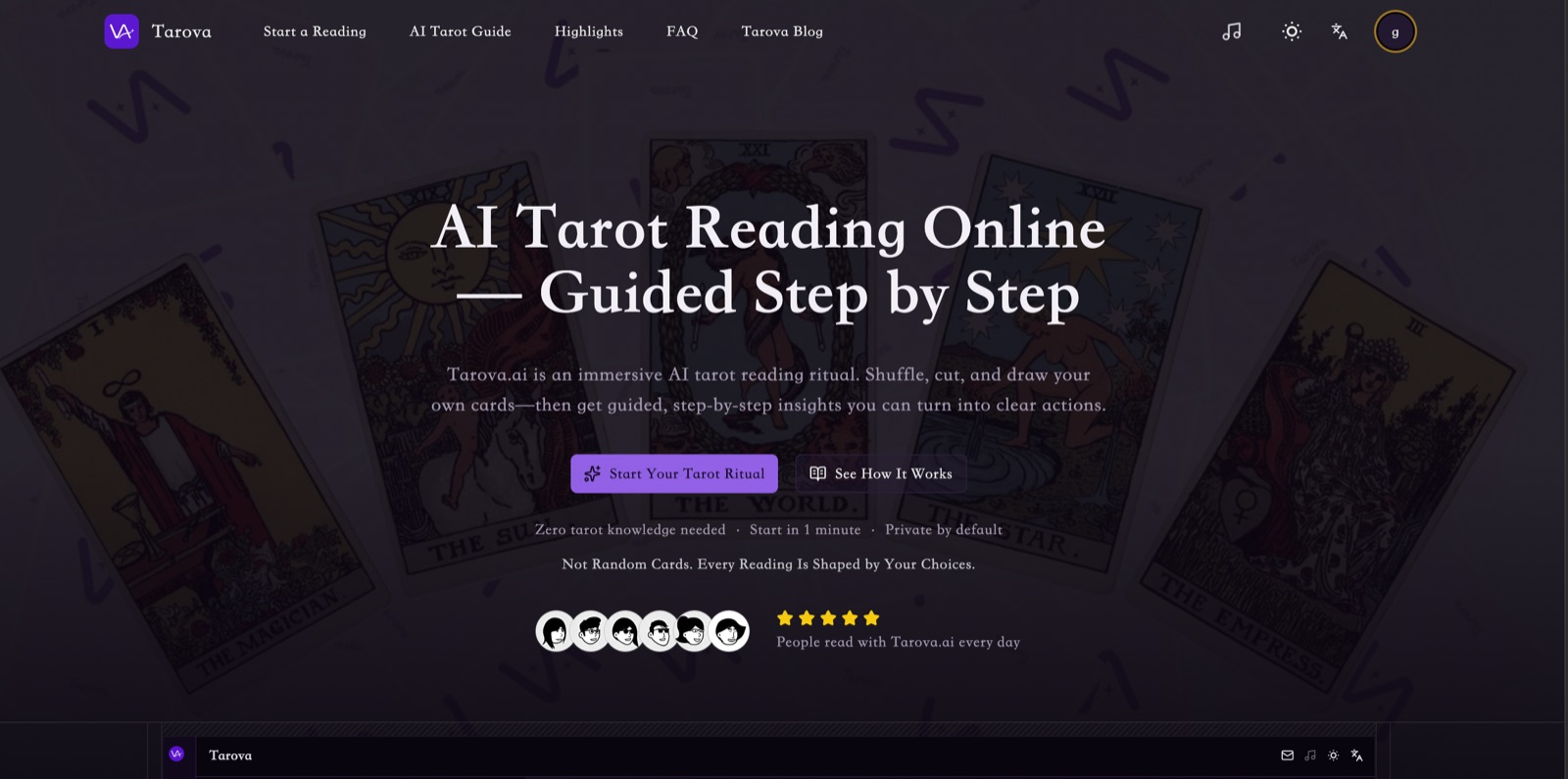
When to Use an Online Tarot Reading
Online tarot reading is most useful when you are:
Facing Uncertainty
When you are unsure about a decision or direction.
Reflecting on Relationships
When you want to better understand emotional dynamics or patterns.
Exploring Personal Growth
When you are thinking about habits, challenges, or self-development.
Seeking Perspective
When you need a different way of looking at a situation.
Limitations of Online Tarot Readings
While online tarot can be insightful, it is important to understand its limitations.
- It does not provide guaranteed predictions
- It cannot replace professional advice in legal, medical, or financial matters
- Interpretations depend on context and framing of the question
The most useful readings are those used for reflection rather than certainty.
How to Get the Most Out of an Online Tarot Reading
A better reading often starts with better input.
Ask Clear Questions
Instead of vague questions, try focusing on specific situations.
Stay Open-Minded
Treat the reading as a perspective rather than a fixed answer.
Reflect After the Reading
The most meaningful insights often appear after the reading is complete.
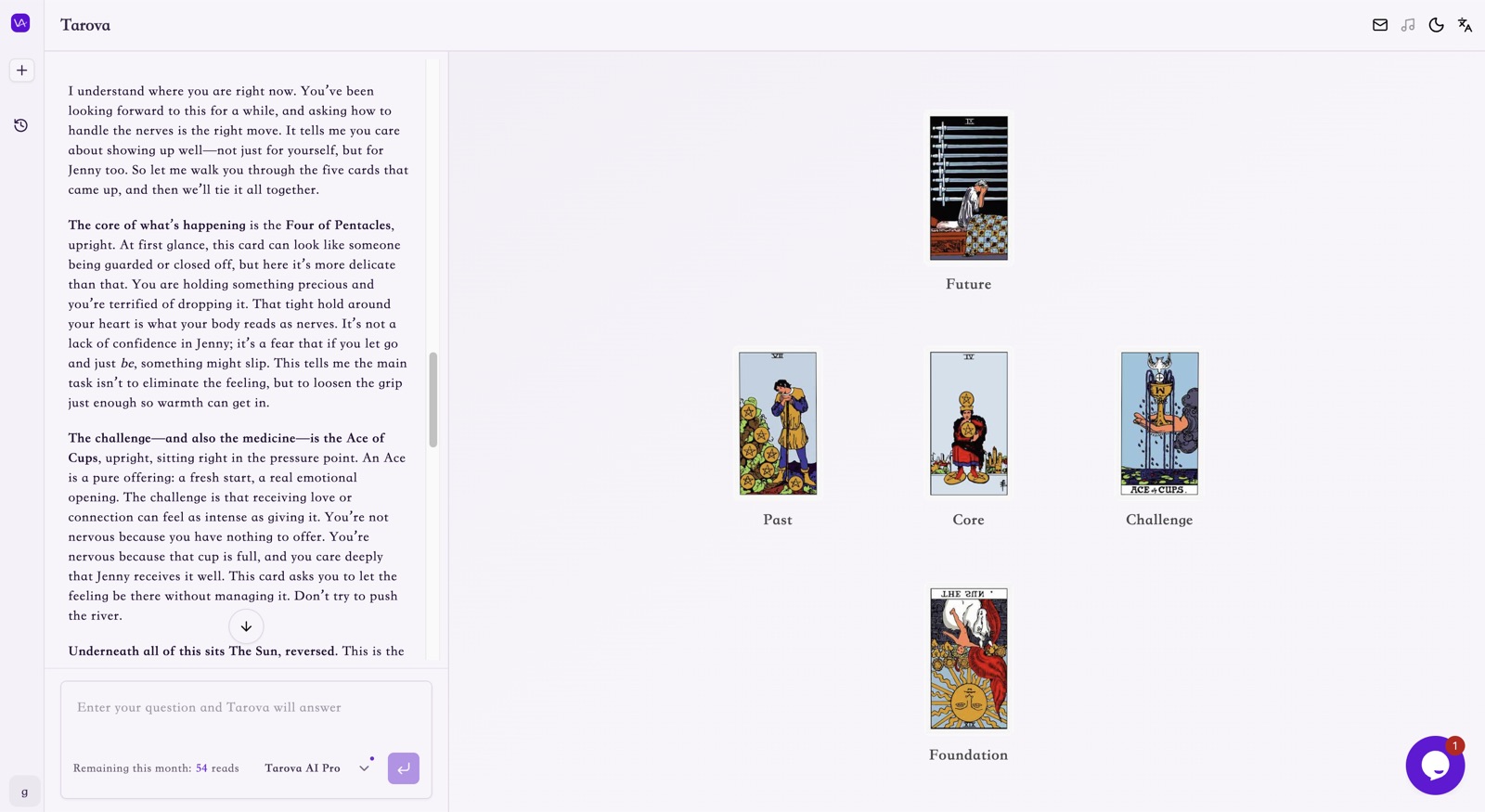
Experience a More Interactive Form of Online Tarot
Most online tarot readings are static.
They provide interpretations but do not allow deeper exploration.
Modern AI tarot experiences go further by:
- Clarifying your question before the reading
- Simulating a structured card-drawing ritual
- Interpreting cards within context
- Exploring relationships between cards
- Allowing follow-up conversation for deeper insight
This turns tarot from a one-time output into an interactive reflective experience.
Why This Matters
Online tarot reading is no longer just about pulling cards.
It has evolved into a structured way of exploring thoughts, emotions, and decisions in a guided format.
Whether through traditional systems or AI-assisted platforms, the goal remains the same:
To help you see your situation from a new perspective.
Final Thoughts
Online tarot reading has made tarot more accessible than ever before.
It removes barriers such as location, experience level, and complexity, allowing more people to explore tarot as a reflective tool.
The most valuable readings are not those that predict the future with certainty, but those that help you better understand the present moment and the choices available to you.
In that sense, online tarot reading is less about finding fixed answers—and more about gaining clarity for the next step forward.