
TL;DR
If you pulled the reversed Six of Swords, the short answer is this: you may already know what needs to change, but part of you is still emotionally, mentally, or practically stuck. This card often appears when movement is delayed, closure is incomplete, or you are carrying old pain into a new chapter.
In love, it can point to unresolved conflict, mixed signals, or the question of whether healing is actually happening. In career readings, it can reflect burnout, hesitation, or a difficult transition that keeps getting postponed. In a yes-or-no reading, the reversed Six of Swords is usually not a clean yes. It is more often a not yet, a not like this, or a sign that progress depends on what you are willing to leave behind.
This guide is for readers who want more than a generic card definition. It is for people asking the real questions: Is this relationship moving forward? Am I healing or just circling the same pain? Is reconciliation possible? Am I resisting the move I already know I need to make?
Table of Contents
- What does the reversed Six of Swords mean?
- Reversed Six of Swords in love
- Reversed Six of Swords as feelings
- Reversed Six of Swords and reconciliation
- Reversed Six of Swords in career
- Reversed Six of Swords yes or no
- How to read this card in a real-life spread
- What to do next
- FAQ
What Does the Reversed Six of Swords Mean?
The reversed Six of Swords meaning centers on blocked transition. Upright, this card usually suggests moving away from conflict, pressure, or emotional turbulence and toward calmer ground. Reversed, that movement becomes harder. The boat does not fully arrive. The past is not fully past. The mind keeps returning to what the heart has not finished processing.
That does not automatically mean disaster. It often means the lesson is not about speed. It is about honesty. The reversed Six of Swords can show up when you are:
- trying to leave but still emotionally attached
- physically moving on but mentally replaying the past
- staying in a situation that has already outlived its peace
- asking for clarity while avoiding the conversation that would create it
- hoping time alone will solve what actually requires action
At a deeper level, this card asks whether you are in transition or in avoidance. Those are not the same thing. Transition has direction. Avoidance has motion, but no arrival.
This is why the card is so powerful in emotionally loaded readings. It does not simply say, "You are stuck." It asks, "What are you still trying to carry that is making the crossing heavier than it needs to be?"
Quick interpretation: The reversed Six of Swords often means delayed healing, unfinished closure, emotional resistance, or difficulty leaving a stressful chapter behind.
Our Core Take
If we had to give one clear answer first, it would be this: the reversed Six of Swords is a card of incomplete departure.
That is why it matters so much in relationship, breakup, and decision readings. It rarely describes a purely external delay. More often, it shows that the deeper issue is internal friction. You may want peace, but still be attached to the argument. You may want a new beginning, but still be loyal to the wound. You may want to move on, but still be negotiating with something that already ended emotionally.
For most readers, this is the real turning point. The card is not punishing you. It is showing you the cost of carrying unresolved pain into the next chapter.
Key Meaning at a Glance
Reversed Six of Swords Keywords
- emotional baggage
- delayed transition
- difficulty moving on
- unresolved conflict
- repeating old patterns
- hesitation
- mental unrest
- incomplete healing
Best Fit Scenarios
- after a breakup that still feels unfinished
- during a relationship pause or separation
- when reconciliation is being considered
- during a career change that keeps stalling
- when your mind says "leave" but your habits say "stay"
What This Card Usually Is Not
- not instant closure
- not smooth recovery
- not a clean emotional reset
- not a confident yes
Reversed Six of Swords in Love
The reversed Six of Swords in love often appears when a relationship is carrying unresolved tension. Sometimes two people are trying to move past an argument, betrayal, mismatch, or emotionally draining phase, but the repair is incomplete. On the surface things may look calmer. Underneath, the same issue is still sitting in the boat.
This card can show several very different love situations:
- two people want peace, but avoid the real conversation
- one person is trying to move on while the other keeps reopening the wound
- the relationship is technically continuing, but emotionally stalled
- a breakup happened, yet the attachment remains active
- there is a sincere wish for reconnection, but trust is still unstable
If you are asking about an existing relationship, the card does not always mean "leave now." It means the current way of handling the issue is not creating peace. Something important is still unresolved. Without naming it, the relationship can become a loop: tension, temporary calm, tension again.
If you are asking after a breakup, this card often reflects that the emotional cord has not fully been cut. That can feel romantic, but it is not always a sign that reunion is the healthiest answer. Sometimes it simply means the grief is still active.

Signs the Relationship Is in a Reversed Six of Swords Phase
- you keep having the same argument in new language
- distance exists, but relief does not
- you say you are moving forward, but act from old fear
- one or both people are emotionally half-out, half-in
- closure is being postponed in the name of "keeping the peace"
What Love Readings Need From This Card
This card asks for honesty over image. A relationship does not become healthy just because the conflict gets quieter. Sometimes silence is healing. Sometimes silence is avoidance. The reversed Six of Swords asks you to tell the difference.
Reversed Six of Swords as Feelings
When reading the reversed Six of Swords as feelings, the emotional tone is often conflicted. Someone may feel the need for distance, yet still struggle to detach. They may know the connection has been hard, yet still remain mentally tied to it. This card can describe feelings that are not fully settled in either direction.
Typical emotional patterns include:
- wanting peace, but not knowing how to create it
- still thinking about the past
- feeling emotionally stuck
- fearing another difficult conversation
- missing someone, while also knowing the dynamic was exhausting
If you are asking about another person's feelings, this card often suggests they are not emotionally clear yet. That does not mean they feel nothing. In fact, it can mean the opposite. There may be too much residue, too much unfinished emotion, or too much fear around what happens if they fully engage again.
If you are asking about your own feelings, the message is often sobering but useful: you may still be in a transition that you hoped was already over.
Reversed Six of Swords as Feelings for an Ex
This is one of the most important long-tail interpretations around this card. As feelings for an ex, the reversed Six of Swords can indicate:
- unfinished emotional attachment
- regret without a clear repair plan
- lingering sadness
- fear of repeating the same pain
- desire to reconnect mixed with reluctance
It is not the clearest reconciliation card on its own. It shows emotional residue more than emotional readiness.
Reversed Six of Swords and Reconciliation
The reversed Six of Swords reconciliation meaning is nuanced. This card does not automatically say yes, and it does not automatically say no. It says there is unfinished energy between the two people, but unfinished energy is not the same thing as healthy reunion.
Reconciliation is more likely when:
- both people acknowledge what went wrong
- the relationship problem is specific, not endlessly repeating
- someone is willing to take meaningful action
- the connection still has emotional honesty, not just nostalgia
Reconciliation is less likely to go well when:
- the bond is fueled mostly by loneliness or guilt
- the same pattern returns every time
- one person wants reunion while avoiding accountability
- both people miss each other, but neither has truly changed
This is why the reversed Six of Swords can be misleading if read too romantically. The connection may still be alive, but the same baggage may still be traveling with it.
Practical reading rule: If you see the reversed Six of Swords around reconciliation, ask not only "Can they come back?" but also "Can they return differently?"

Reversed Six of Swords in Career
The reversed Six of Swords in career often shows a stalled transition. You may already know your current role, team, workload, or direction is not sustainable, but the move away from it is slow, complicated, or emotionally difficult.
This card can point to:
- delaying a job change
- staying in a draining environment too long
- taking a new role while carrying old stress patterns
- struggling to adapt after a layoff, pivot, or career setback
- wanting relief more than ambition
If your question is about six of swords career change, the card often says the change is real, but incomplete. You may still be negotiating with fear, identity, money pressure, or the discomfort of not knowing what comes next.
That is important because this card does not always call for dramatic leaps. Sometimes it asks for cleaner exits. Sometimes the healthiest next move is not a dream job. It is simply getting out of a pattern that keeps hurting you.
Career Questions This Card Commonly Reflects
- "Why can't I commit to leaving?"
- "Why does the new role still feel heavy?"
- "Why am I still carrying stress from the last workplace?"
- "Am I resisting a move I already know I need?"
In practical terms, the reversed Six of Swords in work readings often rewards structure. Timelines, boundaries, applications, conversations, and decision checkpoints matter more here than vague intention.
Reversed Six of Swords Yes or No
In a reversed Six of Swords yes or no reading, the answer is usually maybe leaning no, or more precisely, not yet.
This is especially true when the question involves:
- returning to an unhealthy relationship
- trying to skip closure
- forcing a transition before you are ready
- hoping for peace without changing the pattern
It can soften toward yes when the question is about:
- facing the issue directly
- finally addressing what has been avoided
- choosing a healthier route instead of repeating the old one
So if you are asking, "Is this a yes-or-no card?" the best answer is:
- No, if you are trying to recreate the past without changing it.
- Maybe, if there is real willingness to resolve the underlying issue.
- Yes, only when the action itself helps you move toward clarity and peace.
That may sound less satisfying than a simple yes or no, but it is much more useful.
How to Read This Card in a Real-Life Spread
A strong tarot article should do more than define the card. It should help the reader know what to pay attention to when the card actually appears in a live reading. Here is the most practical way to read the reversed Six of Swords in context.
If It Shows Up as the Main Energy
The reading is about delayed movement, emotional residue, or resistance to change. The central question becomes: What is preventing the transition from completing?
If It Shows Up in the Past Position
You may still be carrying an unresolved chapter into the present. The event may be over, but the nervous system, attachment pattern, or mental narrative is still active.
If It Shows Up in the Present Position
You are in the middle of the crossing, but the crossing is not smooth. This is often where clarity and discomfort coexist.
If It Shows Up in the Outcome Position
The current path may lead to delay, emotional relapse, or incomplete closure unless something changes. This does not guarantee failure. It warns against passive hope.
Best Clarifying Questions to Ask
- What am I still trying to carry?
- What conversation have I avoided?
- Am I healing, or just distancing?
- What would a cleaner transition actually require?
- What needs closure before I can ask for a new beginning?
What to Do Next
The reversed Six of Swords becomes much more helpful when you treat it as guidance instead of a verdict. If this card appears for you, the goal is not to force instant certainty. The goal is to reduce confusion and stop repeating the same emotional pattern in a prettier form.
A Simple Next-Step Framework
1. Name the unresolved issue
Do not say, "Things are complicated." Say what is actually unfinished. Is it trust, grief, resentment, fear, dependence, or indecision?
2. Separate motion from healing
You can leave and still not heal. You can stay and still not repair. Ask what is truly happening, not just what is visibly changing.
3. Look for the repeating loop
If the same pain keeps returning, the pattern matters more than the latest episode.
4. Decide what peace would actually require
Would peace require a conversation, a boundary, a pause, a goodbye, or a new plan?
5. Choose a path you can sustain
The healthiest transition is not always the most dramatic one. It is the one you can actually live out with integrity.
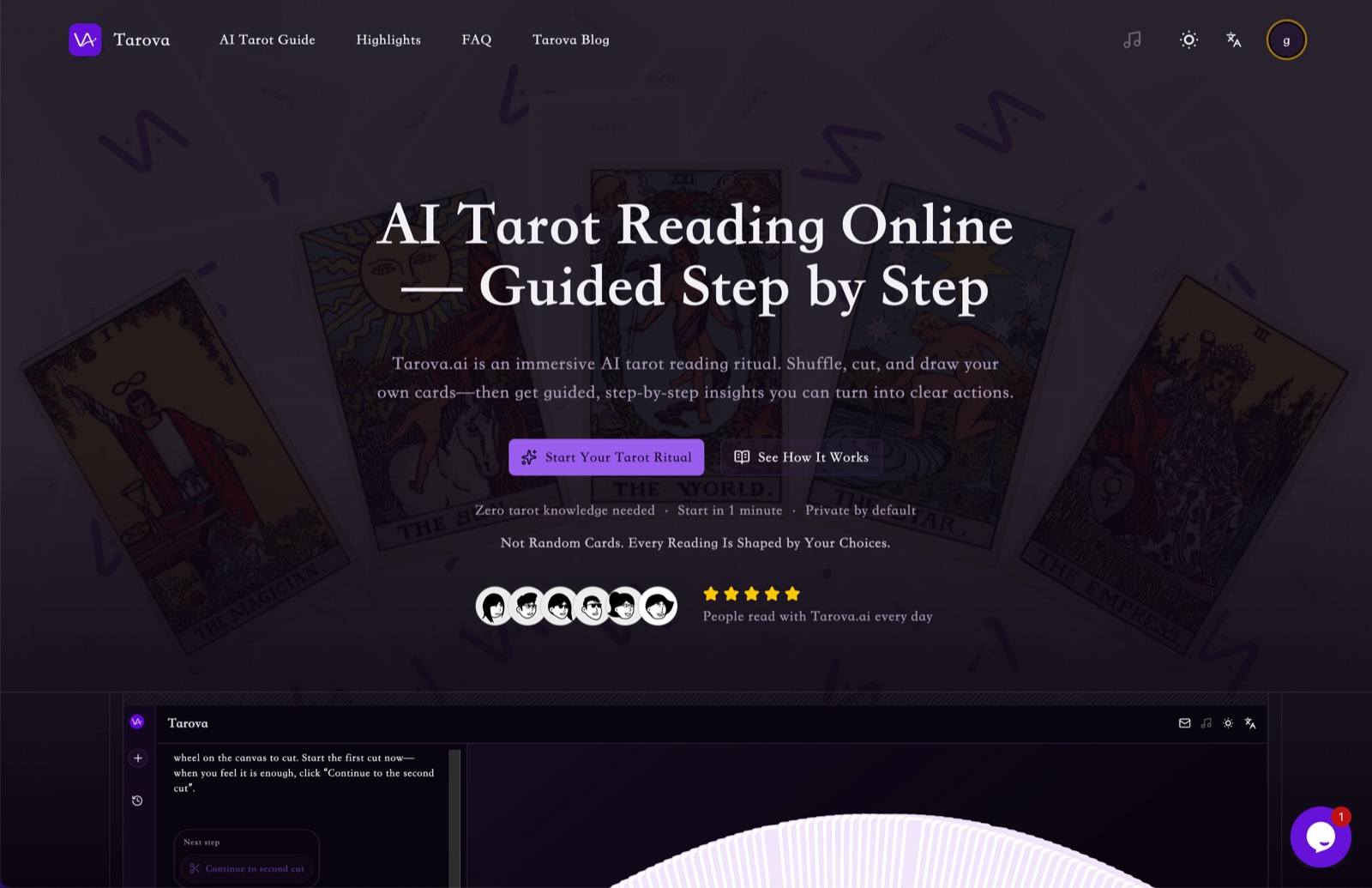
For Tarova, this is where AI tarot becomes more useful than a one-line card definition. A real reading is not just about naming the card. It is about helping you clarify the question, see the emotional pattern, and leave with a concrete next step. If your situation feels more layered than a standard card meaning page can hold, the next step is to continue the reading inside the guided experience on Tarova Chat.
Which Reading Path Is Right for You?
Choose a relationship-focused reading if:
- your main question is about love, mixed signals, or reconciliation
- you keep asking whether someone is coming back
- you feel emotionally stuck after a breakup
Choose a career or decision reading if:
- you know a move is needed but cannot commit to it
- you are navigating burnout, uncertainty, or a job transition
- you need clarity on whether delay is wisdom or fear
Choose a self-awareness reading if:
- the situation keeps repeating across different people or places
- you suspect the deeper issue is your pattern, not only the current event
- you want guidance that turns emotion into a clearer question
If you want examples of how these reading paths play out, the natural next stop after the interpretation is Tarova Showcases. If you already know you want a deeper guided session, go straight to Tarova Chat. If you are comparing ongoing use, Pricing is where the structure becomes clearer.
FAQ
Is the reversed Six of Swords a bad card?
Not necessarily. It is a challenging card, but also a clarifying one. It usually shows delayed healing, unresolved emotion, or difficulty moving on, not inevitable failure.
What does the reversed Six of Swords mean in love?
In love, it often points to unresolved conflict, emotional baggage, stalled healing, or a relationship that is trying to move forward without fully addressing the real issue.
What does the reversed Six of Swords mean as feelings?
As feelings, it usually suggests emotional confusion, lingering attachment, hesitation, or an inability to fully let go or fully move closer.
Does the reversed Six of Swords mean reconciliation?
It can point to unfinished attachment, but not automatic reunion. Reconciliation is only promising if the old pattern can be addressed instead of repeated.
Is the reversed Six of Swords yes or no?
Usually it is a maybe or a not-yet. It rarely gives a clean yes when the question involves unresolved pain, avoidance, or repeating the past.
What does the reversed Six of Swords mean after a breakup?
It often suggests that the emotional transition is incomplete. One or both people may still be processing the ending, revisiting the connection, or struggling to move on fully.
What does the reversed Six of Swords mean for career change?
It commonly points to delayed transition, fear around moving on, or the need to leave a draining pattern before a healthier work chapter can begin.
Final Advice
Most tarot articles stop at interpretation. The better question is what kind of help you need next.
If you only needed a fast answer, the answer is here: the reversed Six of Swords usually signals unresolved transition, emotional delay, or the need to face what has been avoided.
If you need to work through a real situation, especially around love, reconciliation, career change, or emotional confusion, a more guided reading is usually more useful than reading ten card pages in a row. That is exactly where Tarova fits. The value is not random card output. It is the guided question flow, immersive draw experience, and structured interpretation that helps turn vague emotional noise into a clearer next step.
Conclusion
The reversed Six of Swords meaning is not just "stuck." It is the deeper experience of trying to move on while something unresolved is still traveling with you.
That is why this card matters so much in love, feelings, reconciliation, and career readings. It shows the space between knowing and doing, between leaving and healing, between distance and peace. Sometimes the next step is reunion. Sometimes it is closure. Sometimes it is finally admitting that the old route keeps leading back to the same storm.
If you want a clearer answer than a generic keyword page can give, the next move is not more scrolling. It is a better question. Start with a guided reading on Tarova Chat, explore real use cases on Tarova Showcases, and use the result to make the next step in your situation more concrete.