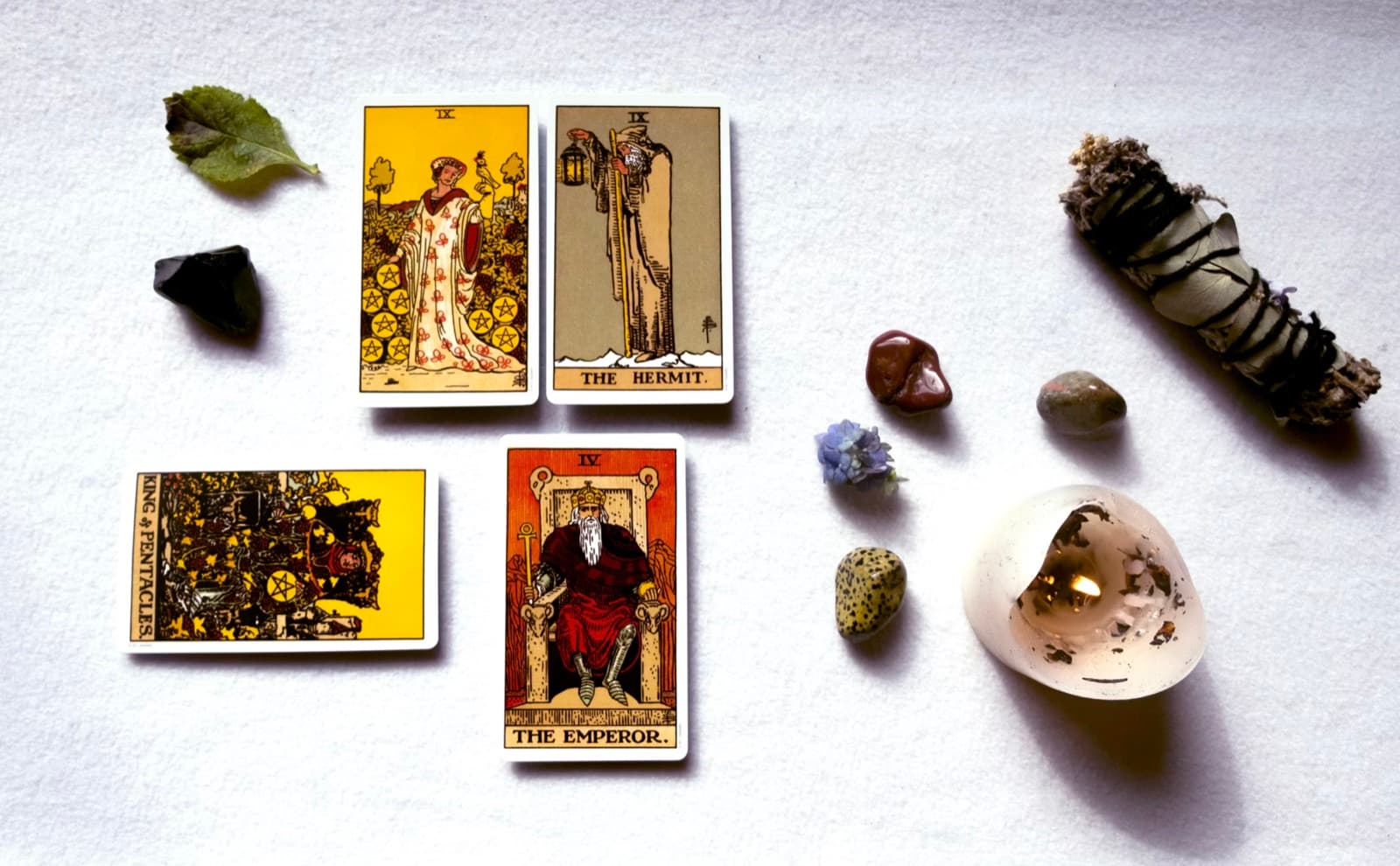
When most people think about tarot reading, they focus on the cards themselves.
The Fool.
The Lovers.
The Hermit.
The Tower.
But experienced tarot readers know that cards are only part of the story.
Equally important is where those cards appear.
This is where tarot spreads come in.
A tarot spread provides structure for a reading by assigning meaning to specific card positions. The same card can communicate a completely different message depending on where it appears within a spread.
Understanding tarot spreads is one of the most important steps in learning how to read tarot effectively.
In this guide, we'll explore:
- What tarot spreads are
- Why card positions matter
- Popular tarot spread layouts
- How to choose the right spread
- Common mistakes beginners make
- How AI can help interpret tarot spreads
Whether you're completely new to tarot or looking to improve your readings, understanding spreads will dramatically improve your ability to interpret cards in context.
What Is a Tarot Spread?
A tarot spread is the arrangement of cards used during a reading.
Each position within the layout represents a different aspect of the question being explored.
For example, in a simple three-card spread:
- Card One may represent the past
- Card Two may represent the present
- Card Three may represent the future
The cards themselves provide symbolism.
The spread provides context.
Without a spread, individual cards can feel disconnected.
A well-designed spread creates a framework that helps transform separate cards into a coherent story.
Why Tarot Spreads Matter
Many beginners focus entirely on memorizing card meanings.
While understanding card symbolism is important, tarot spreads often play an even larger role in interpretation.
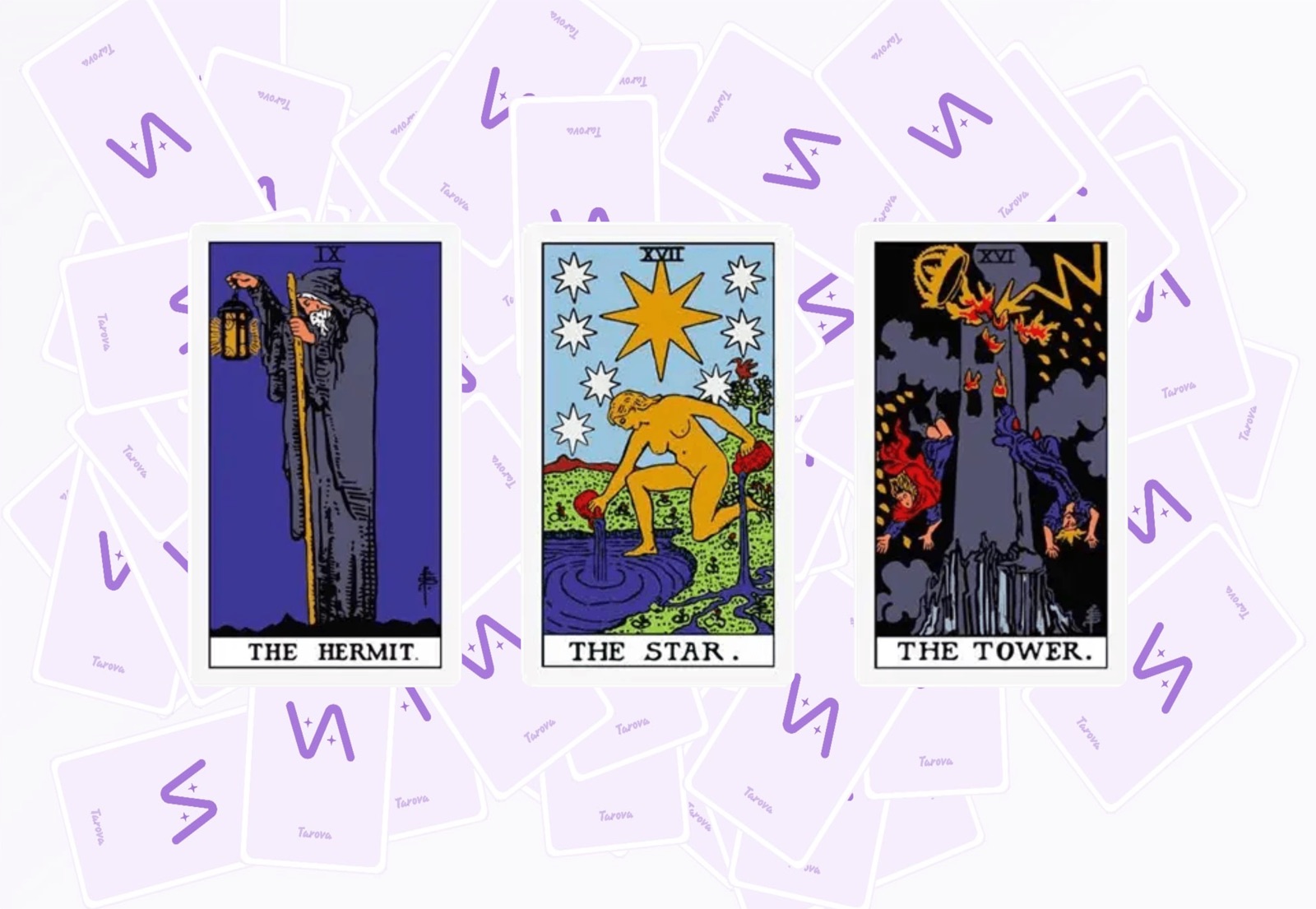
Consider The Hermit card.
If The Hermit appears in:
- A challenge position, it may suggest isolation.
- An advice position, it may encourage reflection.
- A future position, it may indicate a period of self-discovery.
The card hasn't changed.
The position has.
This is why experienced readers pay close attention to both the card and the location in which it appears.
A tarot spread helps answer a crucial question:
What role does this card play within the larger story?
How Tarot Spreads Create Meaning
Think of a tarot spread like a conversation.
Each card contributes a different piece of information.
When viewed together, the cards reveal patterns, relationships, and themes.
For example:
Imagine a three-card spread containing:
- The Fool
- The Hermit
- The Star
Individually, each card has its own symbolism.
Together, they might suggest:
- A new beginning
- A period of introspection
- Renewed hope and clarity
The spread allows these cards to interact with one another.
The result is often far more insightful than reading each card independently.
The Most Popular Tarot Spreads
While there are hundreds of tarot layouts, a few spreads are particularly useful for beginners.
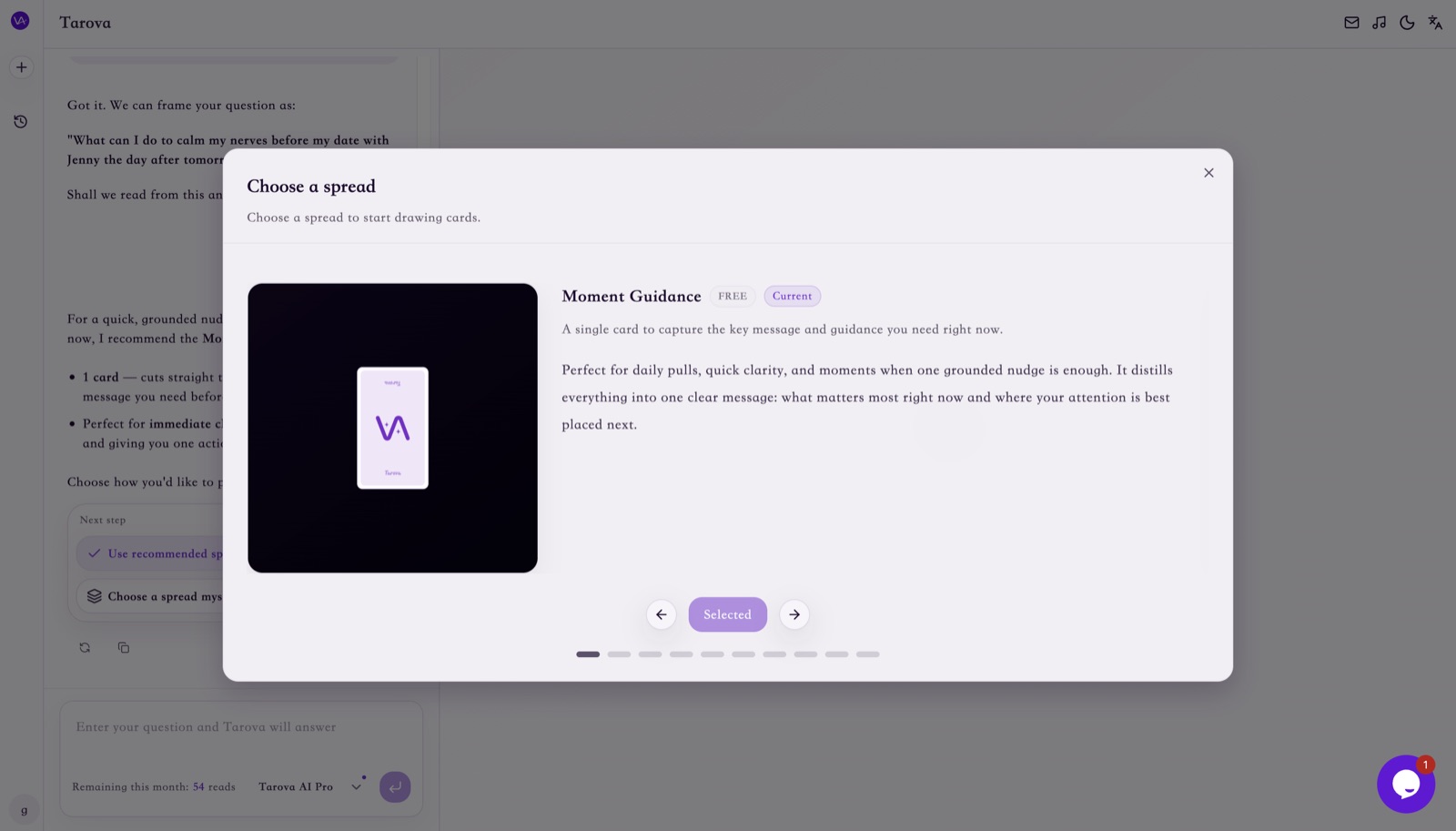
One-Card Tarot Spread
The simplest tarot spread consists of a single card.
Best for:
- Daily guidance
- Reflection
- Simple questions
Because there is only one card, the interpretation tends to focus on a single theme or lesson.
This spread is ideal for beginners who are learning card meanings.
Three-Card Tarot Spread
The three-card spread is one of the most versatile layouts in tarot.
Common variations include:
Past - Present - Future
Explores how a situation has developed over time.
Situation - Challenge - Advice
Focuses on practical guidance.
Mind - Body - Spirit
Provides a holistic perspective on personal growth.
Because it balances simplicity and depth, this is often considered the best tarot spread for beginners.
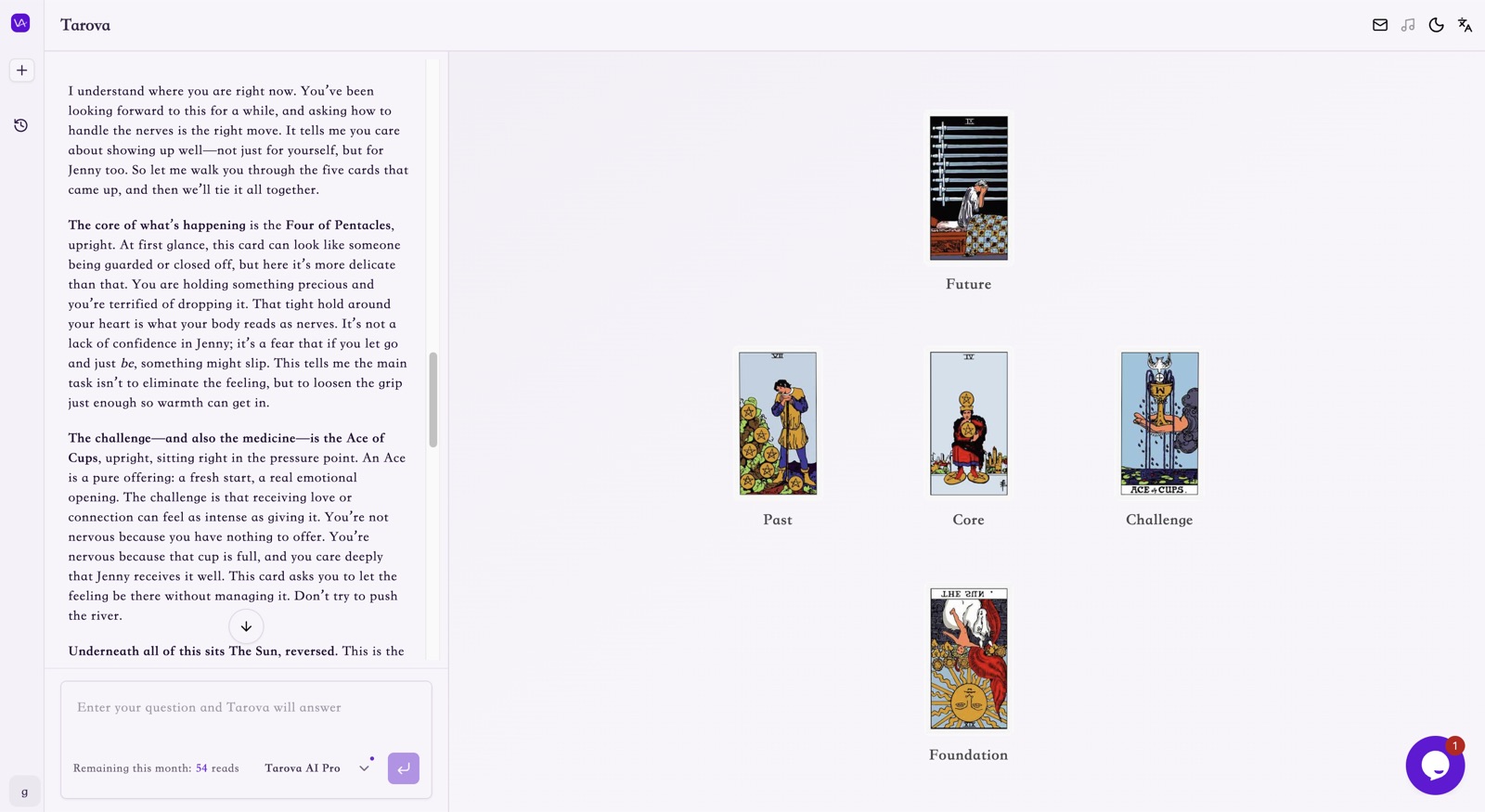
Five-Card Tarot Spread
A five-card spread offers additional detail while remaining relatively easy to interpret.
It can be used to explore:
- Relationship dynamics
- Career decisions
- Personal growth questions
The extra positions allow for a more nuanced understanding of a situation.
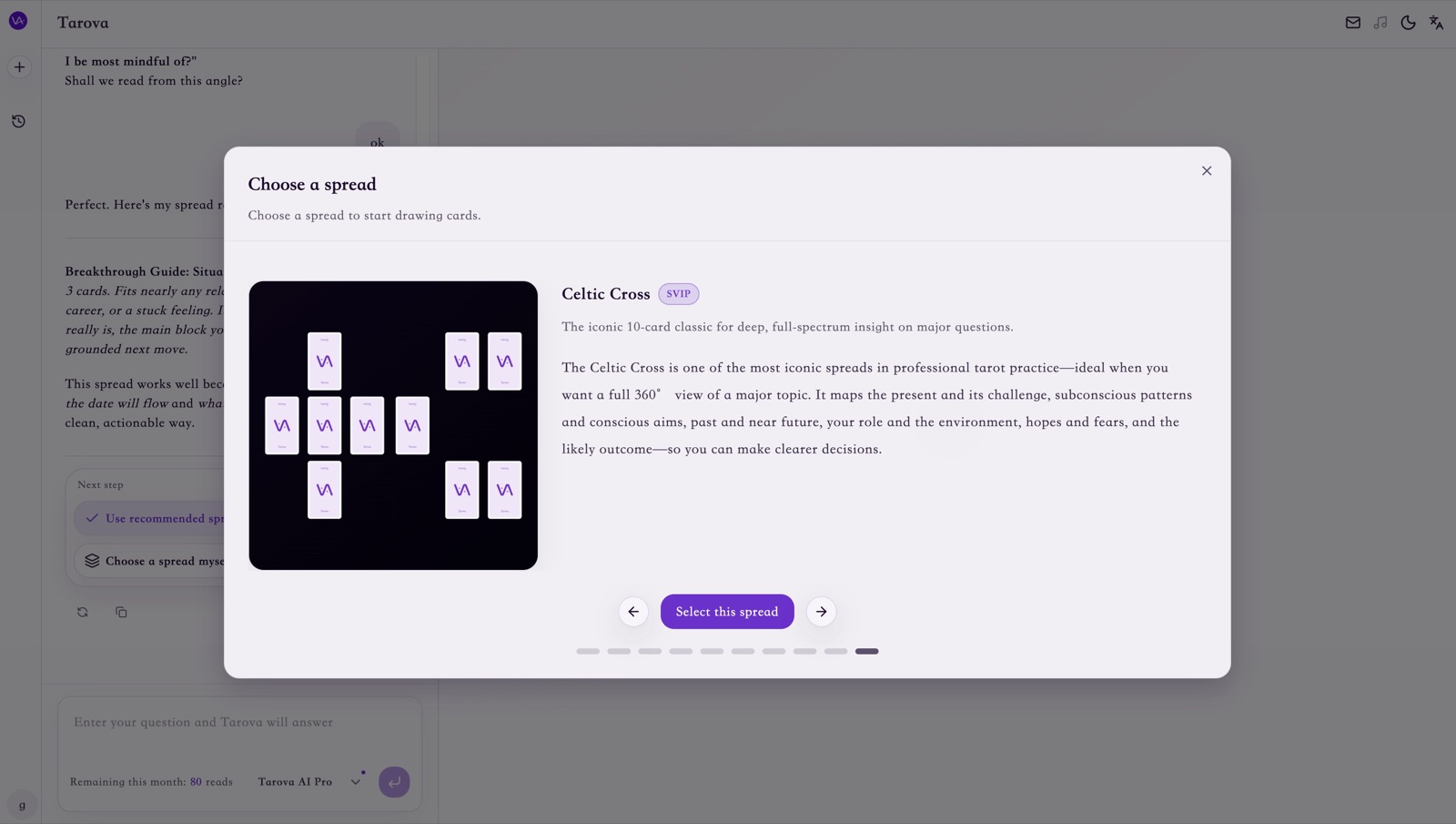
Celtic Cross Tarot Spread
The Celtic Cross is one of the most well-known tarot layouts.
It typically contains ten cards and explores multiple dimensions of a question.
It often examines:
- Current circumstances
- Obstacles
- Conscious influences
- Subconscious influences
- Potential outcomes
While powerful, it can feel overwhelming for new readers.
Many tarot practitioners recommend mastering smaller spreads first.
How to Choose the Right Tarot Spread
Not every question requires a large spread.
In fact, using too many cards can sometimes create confusion.
A useful guideline is:
Use a One-Card Spread When:
- You need quick guidance
- You're practicing card interpretation
- The question is straightforward
Use a Three-Card Spread When:
- You want balanced insight
- You're exploring a specific situation
- You need practical guidance
Use a Larger Spread When:
- The issue is complex
- Multiple influences are involved
- You want a deeper analysis
Choosing the right spread often improves clarity more than adding additional cards.
Common Mistakes Beginners Make with Tarot Spreads
Learning tarot involves more than selecting cards.
Several mistakes can make interpretation more difficult.
Ignoring Card Positions
One of the most common errors is focusing only on card meanings while ignoring the spread structure.
Positions provide context.
Without context, interpretations often become vague.
Using Overly Complex Spreads Too Soon
Beginners are often attracted to large layouts such as the Celtic Cross.
However, smaller spreads usually provide clearer lessons while you're learning.
Reading Every Card in Isolation
Tarot works best when cards are viewed as a connected narrative.
The relationships between cards often reveal the most important insights.
Asking Unclear Questions
A spread is only as useful as the question it explores.
Specific questions often produce more meaningful readings.
How AI Can Help Interpret Tarot Spreads
Understanding card meanings is challenging.
Understanding how multiple cards interact within a spread can be even more difficult.
This is one area where modern AI tarot systems can be especially helpful.
Rather than analyzing cards individually, AI can evaluate:
- Card positions
- Spread structure
- Symbolic relationships
- Recurring themes
- The user's original question
This creates a more contextual interpretation.
Instead of asking:
What does this card mean?
The reading becomes:
What does this card mean in this position, within this spread, for this situation?
That shift often leads to deeper and more useful insights.
Why Tarot Spreads Are More Important Than Many People Realize
Most beginners start by studying card meanings.
Eventually, they discover that tarot is not simply a collection of 78 separate definitions.
The real magic often emerges through relationships.
Relationships between:
- Cards
- Positions
- Questions
- Themes
- Personal circumstances
Tarot spreads provide the structure that allows those relationships to emerge.
Without that structure, much of the richness of a reading can be lost.
Explore Tarot Spreads Through Interactive Readings
At Tarova, we believe meaningful tarot readings come from understanding how cards work together, not just what individual cards mean.
Our AI-guided tarot experience helps users:
- Clarify their questions
- Draw cards through an immersive ritual process
- Understand spread positions
- Explore relationships between cards
- Receive personalized interpretations
- Continue the reading through interactive conversation
Because the value of a tarot spread isn't found in a single card.
It's found in the story the cards create together.
Frequently Asked Questions
What is the best tarot spread for beginners?
A three-card spread is often the best starting point because it introduces card relationships without becoming overly complicated.
Can I create my own tarot spread?
Yes. Many experienced readers develop custom spreads tailored to specific questions or situations.
How many cards should a tarot spread have?
There is no universal rule. The ideal number depends on the complexity of the question and the level of detail desired.
Is the Celtic Cross spread good for beginners?
It can be challenging. Most new readers benefit from mastering smaller spreads before attempting larger layouts.
Why do card positions matter in tarot?
Card positions provide context and help determine how each card contributes to the overall message of the reading.
Final Thoughts
Tarot spreads do more than organize cards on a table.
They provide the structure that transforms individual symbols into meaningful stories.
Whether you're using a simple one-card draw or a complex Celtic Cross layout, the spread creates context, reveals relationships, and guides interpretation.
Learning tarot card meanings is an important first step. Learning how those meanings change within different positions and layouts is where tarot reading truly begins.
The more you understand tarot spreads, the easier it becomes to move beyond isolated card definitions and uncover the deeper narratives hidden within every reading.