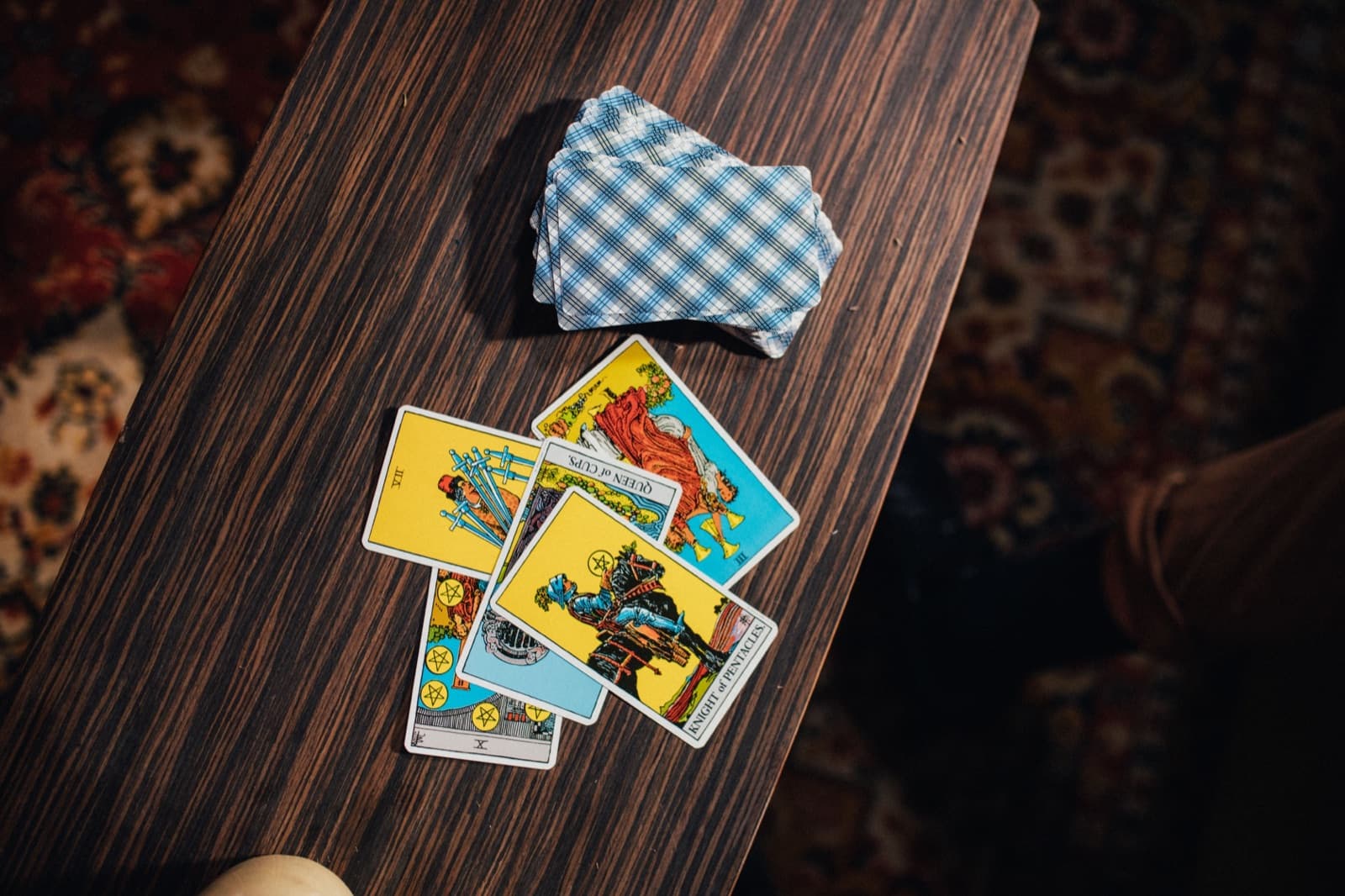
When people search for tarot card number meanings, they are usually trying to solve one frustration: why do different cards sometimes feel strangely connected even when the imagery changes. The answer is that tarot numbers create a repeating structure across the deck. A Three of Cups and a Three of Pentacles do not mean the same thing, but they often share a similar stage of energy: growth, development, or expansion through connection.
That is why learning the numbers can make tarot feel much less random. Instead of memorizing 78 completely separate definitions, you start to notice patterns. The suit tells you where the story is happening. The number tells you what stage that story has reached.
In this guide, we will break down tarot card number meanings from 1 to 10, show how they shift across the suits, and explain how to use them in real readings without turning tarot into a rigid formula.
What tarot card number meanings actually tell you
Tarot numbers work like a hidden spine running through the Minor Arcana. They do not replace imagery, symbolism, or intuition, but they give structure to what you are seeing.
In simple terms:
- the suit shows the area of life
- the number shows the stage, rhythm, or pattern
For example:
- Cups deal with emotions, relationships, and inner experience
- Wands deal with action, desire, momentum, and creative force
- Swords deal with thought, communication, conflict, and clarity
- Pentacles deal with work, money, routine, and the physical world
So if you draw a Five:
- Five of Cups may suggest emotional disappointment or grief
- Five of Wands may suggest conflict, friction, or competition
- Five of Swords may suggest a tense mental or verbal clash
- Five of Pentacles may suggest material strain or instability
The details change, but the shared pattern of the number still matters. Five often disrupts what Four tried to stabilize.
If you are still building your foundation, our guide to tarot card meanings helps explain how numbers fit into the larger symbolic language of the deck.
Tarot card number meanings from 1 to 10
Below is the simplest way to understand the numerical rhythm that runs through the Minor Arcana.
1 or Ace: beginning, seed, raw potential
Aces mark the start of an energy. They are less about completion and more about emergence.
They can suggest:
- a new emotional opening
- a spark of motivation
- a fresh idea or truth
- the beginning of a practical opportunity
An Ace is not the whole story. It is the first door.
2: duality, choice, balance, tension
Twos often bring a meeting point. Sometimes that feels harmonious. Sometimes it feels undecided.
They can suggest:
- partnership
- comparison
- emotional or mental split
- the need to balance two forces
Two is where the original spark meets response.
3: growth, expression, early expansion
Threes move energy outward. They often show development, collaboration, or momentum after a first decision has been made.
They can suggest:
- expression
- social connection
- teamwork
- visible progress
Three feels more alive than Two, but it is still early in the cycle.
4: structure, grounding, stability
Fours tend to stabilize. They create form, boundaries, or a place to stand.
They can suggest:
- emotional containment
- rest or pause
- structure
- security
This can feel supportive, but in some readings Four also hints at rigidity if the structure becomes too tight.
5: disruption, challenge, change
Five often breaks what Four built. That does not automatically make it negative, but it usually introduces strain, instability, or necessary friction.
They can suggest:
- conflict
- disappointment
- pressure
- loss of equilibrium
Five changes the rhythm. It forces movement.
6: adjustment, healing, realignment
Six often follows the shake-up of Five with a search for better order.
They can suggest:
- recovery
- reconciliation
- support
- moving toward a healthier balance
Six is not always perfect harmony, but it usually shows some kind of meaningful correction.
7: testing, reflection, complexity
Sevens often ask more from you. They can show challenge, inner testing, strategy, uncertainty, or the need to look deeper.
They can suggest:
- reassessment
- faith under pressure
- hidden motives
- effort that requires more intention
Seven is where the path becomes less automatic.
8: movement, mastery, momentum
Eights tend to intensify. They often show motion, skill-building, repetition, or concentrated power.
They can suggest:
- rapid movement
- focused work
- inner strength
- sustained effort
Where Seven questions, Eight usually commits.
9: culmination, intensity, nearing completion
Nines often feel close to completion, but not fully closed. They can be wise, intense, fulfilling, or heavy depending on the suit.
They can suggest:
- emotional fullness
- mental pressure
- long-earned progress
- the final stretch before closure
Nine often asks, "What is this cycle costing, and what is it giving back?"
10: completion, overflow, ending of a cycle
Tens bring a cycle to its fullest expression. That can feel abundant, overwhelming, conclusive, or ready to transform into a new beginning.
They can suggest:
- completion
- emotional or practical fulfillment
- burden through excess
- the end of one pattern and the start of another
Ten closes the loop so Ace can begin again.
How the same tarot number changes across the suits
This is where tarot card number meanings become especially useful. The number gives you the pattern, but the suit shows the life area where that pattern is playing out.
Here is a simple example with the number Three:
- Three of Cups may suggest friendship, emotional support, or celebration
- Three of Wands may suggest expansion, momentum, or looking ahead
- Three of Swords may suggest emotional truth through pain, separation, or heartbreak
- Three of Pentacles may suggest collaboration, craft, or building something with others
All four cards share the energy of development and outward movement. But the emotional tone changes because each suit speaks a different language.
That is why numbers are so helpful. They teach you to read in layers rather than memorizing isolated definitions.
If you want to go deeper into layered interpretation, our article on how to read tarot cards is a good next step.
Tarot card number meanings in upright and reversed patterns
Numbers do not stop mattering when a card is reversed. In many readings, reversal changes how the number's energy is expressed rather than erasing it.
For example:
-
an upright Four may show stable structure
-
a reversed Four may show blocked rest, rigidity, or unstable boundaries
-
an upright Six may show healing or support
-
a reversed Six may show imbalance, delayed repair, or difficulty receiving help
-
an upright Eight may show focused momentum
-
a reversed Eight may show scattered effort or movement that is stuck
This is a useful way to read reversals without becoming overly dramatic. Instead of asking, "Is the reversal bad?" ask:
- is the number's pattern blocked?
- is it internalized?
- is it distorted?
- is it overextended?
That question usually leads to more grounded interpretation than treating every reversed card as a warning.
Tarot card number meanings in love readings
In relationship readings, numbers often show the stage of the emotional dynamic more clearly than the suit alone.
For example:
- Aces may suggest a new attraction or emotional opening
- Twos may suggest mutuality, choice, or the tension of defining the bond
- Threes may suggest social expansion, third-party influence, or relationship growth depending on context
- Fours may suggest safety, emotional holding, or emotional shutdown
- Fives may suggest friction, disappointment, or instability
- Sixes may suggest reconciliation, support, or a move toward steadier connection
- Sevens may suggest doubt, testing, fantasy, or strategy
- Eights may suggest movement, commitment to growth, or emotional intensity
- Nines may suggest deep satisfaction or private emotional strain
- Tens may suggest long-term completion, family themes, or the end of a cycle
This is why a number can quickly tell you whether a relationship is just beginning, stabilizing, being tested, or reaching a turning point.
For more relationship-specific reading angles, you can browse the love category.
Tarot card number meanings in career readings
In work readings, number patterns can be incredibly practical because they often reflect the stage of a project, role, or decision.
Here is one way to think about them:
- Aces: new offer, idea, or motivation
- Twos: planning, weighing options, managing priorities
- Threes: collaboration, early results, visible development
- Fours: routine, systems, consolidation, holding position
- Fives: stress, competition, uncertainty, disruption
- Sixes: progress, support, recognition, better alignment
- Sevens: evaluation, perseverance, strategic patience
- Eights: disciplined work, repetition, skill-building, fast movement
- Nines: independence, pressure, nearing completion
- Tens: full responsibility, achievement, burnout risk, major closure
This framework becomes especially helpful when you are asking about timing. Often the number tells you whether you are at the seed stage, the testing stage, or the completion stage.
If your reading is about a decision rather than a single card meaning, our guide to tarot spreads may help you choose a better layout for the question.
How to use tarot card number meanings without oversimplifying
The most useful approach is not to read numbers as fixed formulas. Read them as strong clues.
A good reading still depends on:
- the question
- the spread position
- the suit
- the imagery
- the surrounding cards
- the emotional reality of the situation
For example, a Ten does not always mean "the end" in a dramatic sense. It may simply show that something has reached full weight and cannot continue in the same form.
A Five does not always mean disaster. Sometimes it is the honest disruption that stops something stale from pretending to be stable.
Numbers work best when they sharpen your interpretation, not replace it.
Advice for reading number patterns with more confidence
If tarot card number meanings have felt abstract before, start smaller. Instead of trying to master all 78 cards at once, practice noticing the numerical rhythm in a few sample readings.
Helpful ways to build confidence:
- compare cards with the same number across different suits
- ask what stage of a process the number suggests
- track which numbers repeat in your readings over time
- notice whether the number feels initiating, stabilizing, disruptive, or completing
- test your interpretation against the full spread instead of one card in isolation
If you want a more interactive way to test how number patterns change with real questions, you can bring that into Tarova chat and compare the numerical pattern with the emotional tone of the reading.
Conclusion
The real value of tarot card number meanings is that they help you see structure inside the deck. Once you understand the rhythm from 1 to 10, the cards stop feeling like 78 disconnected messages and start feeling like variations on deeper patterns.
That does not make tarot mechanical. It makes it more readable. The suit tells you where the energy is happening. The number tells you how that energy is developing. Together, they give you a clearer starting point for interpretation in love, career, and everyday decision-making.
When you learn to recognize those patterns, even complex readings begin to feel more coherent.
FAQ
What do tarot card numbers mean?
Tarot card numbers usually show the stage or rhythm of an experience. The suit shows the life area, while the number helps explain whether that energy is beginning, stabilizing, being tested, growing, or completing.
Are tarot card number meanings the same in every suit?
No. The core numerical pattern often repeats, but it changes shape through the suit. A Five in Cups feels different from a Five in Pentacles because emotions and material life are not the same domain.
Do tarot card number meanings matter in the Major Arcana too?
Yes, but in a different way. Major Arcana numbers also carry symbolic progression, though they are usually read more as archetypal stages than as a repeating suit-based pattern like the Minor Arcana.
How do reversed cards affect tarot number meanings?
A reversed card often changes how the number's energy is expressed. It may show blockage, delay, distortion, overcompensation, or an inward version of the same numerical theme.
What is the easiest way to learn tarot card number meanings?
The easiest way is to study the numbers 1 to 10 as patterns first, then compare how those patterns show up in Cups, Wands, Swords, and Pentacles. This is often much easier than memorizing every card as a separate definition.